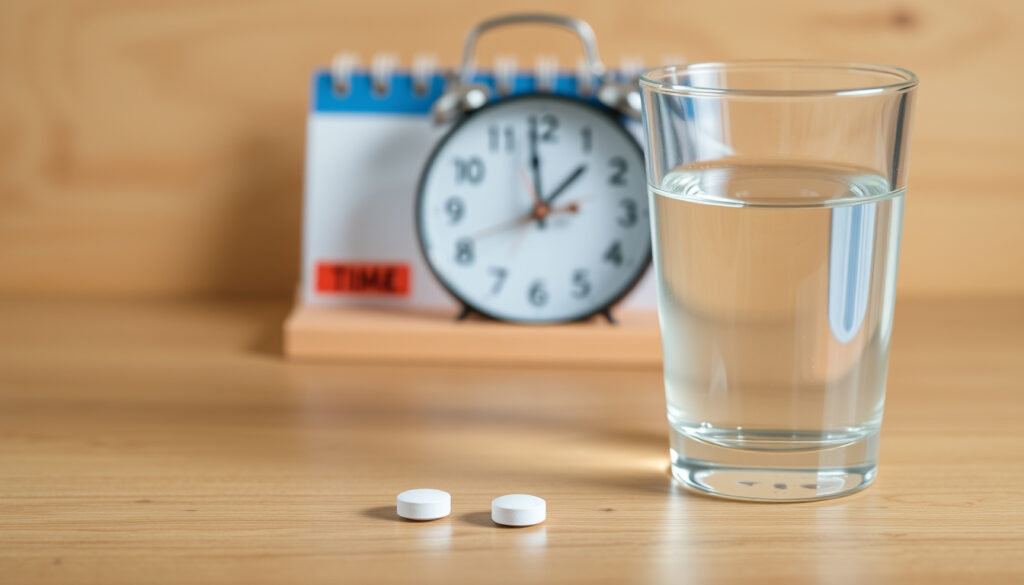
How Many Paracetamol a Day? Safe Dosage Guide
Paracetamol is one of the most common painkillers, but exceeding the recommended dose can cause serious liver damage. UK health authorities set clear boundaries: adults should not take more than 4,000 mg (eight 500 mg tablets) in 24 hours, with at least four hours between doses.
Maximum daily dose: 4,000 mg (8 x 500 mg tablets) | Minimum time between doses: 4 hours | Maximum doses per day: 4 | Standard single dose: 500 mg – 1,000 mg (1–2 tablets)
Safe Dosage
- Maximum 4g per day (NICE CKS)
- 4 doses max per day
- Wait 4 hours between doses
- Do not exceed 8 tablets of 500 mg
Overdose Warning
- Taking more than 4g in 24 hours risks liver damage
- Symptoms: nausea, vomiting, abdominal pain
- Seek emergency care immediately
When to See a Doctor
- Pain persists beyond 3 days
- You have liver disease
- You accidentally overdose
Key Facts
- Standard single dose: 500 mg – 1,000 mg (NHS 111 Wales)
- Maximum daily: 4,000 mg (North Tees NHS)
- Do not take more than 4 doses in 24 hours
| Parameter | Value | Source |
|---|---|---|
| Standard single dose | 500 mg – 1,000 mg (1–2 tablets) | NICE CKS |
| Maximum daily dose | 4,000 mg (8 tablets) | North Tees NHS |
| Minimum interval | 4 hours | NHS 111 Wales |
| Maximum doses per day | 4 | NHS |
| Dose reduction for low weight (<40 kg) | 2 g per day | Lancashire NHS formulary |
| Dose reduction for 41–49 kg | 3 g per day | Lancashire NHS formulary |
How much paracetamol can I take in 24 hours?
Official UK guidance from the North Tees and Hartlepool NHS Foundation Trust states that adults should not exceed eight 500 mg tablets (4 g) in 24 hours. This aligns with NICE CKS and NHS 111 Wales. The dose is typically one or two 500 mg tablets every four to six hours as needed, but never more than four doses in a day.
What is the maximum paracetamol dose in 24 hours?
4,000 mg (4 g). This is the ceiling for most adults without risk factors. Higher doses increase the risk of acute liver injury.
How many 500mg paracetamol can I take in a day?
Eight tablets. Do not exceed this number. The North Tees NHS page is explicit: “Do not take more than 8 tablets in 24 hours.”
Can I take 2 paracetamol every 4 hours?
Yes, provided you do not exceed four doses in 24 hours. The standard adult dose is 1–2 tablets (500 mg–1,000 mg) every 4–6 hours. NHS 111 Wales states: “Always leave at least 4 hours between doses.”
Can I take 3 paracetamol at once?
No. Taking three 500 mg tablets (1,500 mg) in a single dose exceeds the recommended 1,000 mg maximum for one dose. This increases the risk of overdose. The Shropshire, Telford and Wrekin NHS guideline recommends 500 mg to 1 g per dose.
How many paracetamol should I take at a time?
One or two 500 mg tablets. Do not exceed 1,000 mg per dose.
“Do not take it more than 4 doses in 24 hours.”
— NHS
The implication: four doses of 1,000 mg each equals 4,000 mg. Sticking to this schedule keeps you within safe limits.
What happens if you take more than 2 paracetamol at once?
Taking more than 2 tablets (1,000 mg) at once can lead to paracetamol overdose, which causes acute liver injury. Symptoms may include nausea, vomiting, abdominal pain, confusion, and jaundice. The BMJ Drug and Therapeutics Bulletin notes that the usual adult dose is 0.5 to 1 g every 4–6 hours. Exceeding this can be dangerous.
What happens if you take 4 paracetamol instead of 2?
Four tablets (2,000 mg) in one dose is a serious overdose. Immediate medical help is required. The liver processes paracetamol via glutathione; overwhelming this pathway leads to toxic NAPQI accumulation.
Which organ does too much paracetamol affect?
The liver. Paracetamol overdose is the leading cause of acute liver failure in the UK. The Lancashire and South Cumbria NHS formulary recommends reduced doses for patients with liver impairment (e.g., 3 g/day for decompensated cirrhosis).
What is the treatment for paracetamol poisoning?
Treatment involves N-acetylcysteine (NAC) to replenish glutathione. Early administration can prevent liver damage. Anyone who suspects an overdose should go to the emergency department immediately.
Why can’t you take paracetamol for more than 3 days in a row?
UK guidelines advise against using paracetamol continuously for more than three days without medical advice. Prolonged use may cause liver damage, especially if combined with alcohol or other medications. The Scottish NHS guidance recommends dose reduction for adults with risk factors such as low body weight, renal/hepatic impairment, or glutathione deficiency.
Is it safe to take paracetamol daily for years?
No. Long-term daily use should be medically supervised. Chronic pain conditions require alternative treatments. The NICE CKS advises that paracetamol should be used at the lowest effective dose for the shortest possible time.
What happens if you take paracetamol for more than 3 days?
Continuing beyond three days without consulting a doctor increases the risk of liver toxicity, especially if the person has underlying liver disease or is taking other medications.
“Paracetamol should not be used for more than 3 days without medical advice.”
— NHS 111 Wales
The pattern: short-term use for acute pain is safe, but chronic use requires monitoring.
How long does it take for 2 paracetamol to kick in?
Paracetamol is absorbed quickly. Onset of pain relief occurs within 30 to 60 minutes, with peak effect at 1 to 2 hours. The duration of action is 4 to 6 hours, which is why the dosing interval is set at 4 to 6 hours.
How fast does paracetamol work?
Most people feel relief within 30 minutes after oral administration. Taking it on an empty stomach can speed absorption, but it is safe to take with food.
When should I take paracetamol for best effect?
Take at the first sign of pain, but do not exceed the recommended dose and interval. For pain that lasts more than 3 days, see a doctor.
tga.gov.au, best.barnsleyccg.nhs.uk, www2.hse.ie, shropshiretelfordandwrekinccg.nhs.uk, nhs.uk
Frequently Asked Questions
Can I take paracetamol with ibuprofen?
Yes, you can take paracetamol and ibuprofen at different times, but do not exceed the maximum dose of each. Ibuprofen is an anti-inflammatory; paracetamol is a pain reliever. Always follow the instructions on the label.
Can I take paracetamol if I have liver disease?
If you have liver disease, consult your doctor before taking paracetamol. The Lancashire NHS formulary recommends a maximum of 3 g per day for adults with decompensated cirrhosis.
Is it safe to take paracetamol while pregnant?
Paracetamol is generally considered safe during pregnancy at recommended doses. However, you should use the lowest effective dose for the shortest time. Always consult your midwife or doctor.
Does paracetamol interact with alcohol?
Yes, chronic alcohol consumption can deplete glutathione, increasing the risk of liver damage from paracetamol. The Scottish NHS guidance recommends dose reduction for adults with glutathione deficiency. Avoid heavy alcohol intake while taking paracetamol.
Can I take paracetamol on an empty stomach?
Yes, paracetamol can be taken on an empty stomach. It is absorbed quickly and does not cause stomach irritation like some other painkillers.
For more on managing pain naturally, see How to Reduce Anxiety Naturally: 10 Evidence-Based Techniques. If you are considering alternatives to smoking, read Is Vaping Better Than Smoking? Health Risks & Facts Comparison.
More related posts
 English Open Snooker 2025: Mark Allen Wins 9-8 Final
 Cast of Gen V – Actors Characters and Updates Guide
 South Africa vs India T20I: Scores, Results & Updates
 Beta Blockers for Anxiety: Best Options, Benefits & Risks
 JPMorgan Share Price: Is JPM a Good Stock to Buy
 Love Island: All Stars 2026 – Season 3, Winners & Watch Guide
 Face ID Not Working? How to Fix It on iPhone
 1923 Season 2: Where to Watch, Episode Count, and Finale Explained