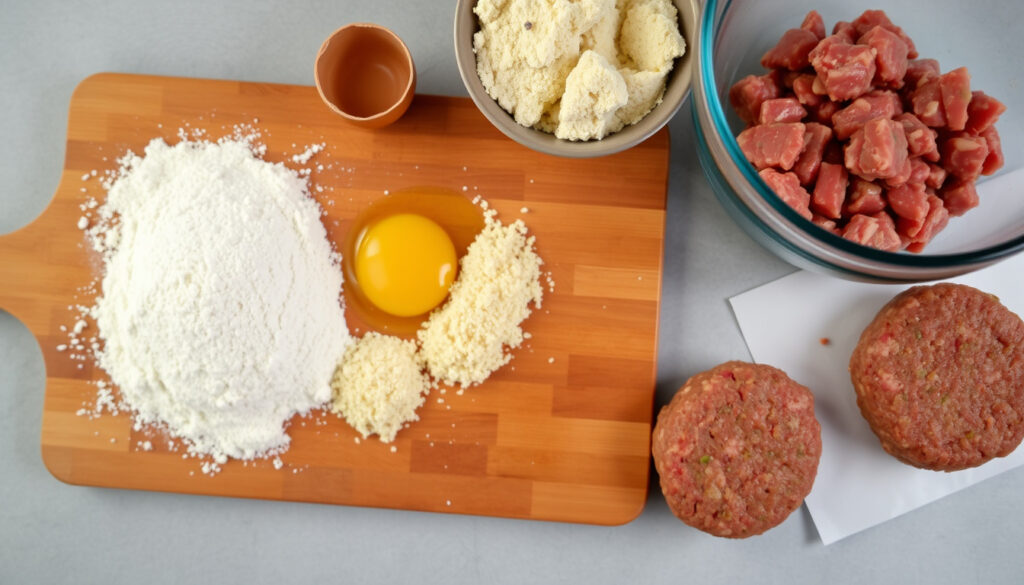
What Is a Binder in Cooking? Definition & Examples
You’re mixing meatloaf and the whole thing keeps falling apart. Or you’re trying to get barbecue rub to actually stick to chicken thighs. That’s where binders come in — the quiet kitchen heroes that hold ingredients together. This guide breaks down what binders are, which ones work for different recipes, and how to substitute when you’re out of eggs or breadcrumbs.
Common binders: Eggs, flour, breadcrumbs, gelatin ·
Primary function: Hold ingredients together and improve texture ·
Meat binders: Mustard, oil, egg wash, mayonnaise ·
Substitutes for eggs: Flaxseed gel, mashed banana, applesauce
Quick snapshot
- Whole eggs, egg whites, or egg yolks (DDR BBQ Supply, specialty cooking retailer)
- Best for cakes, meatloaf, and fritters (DDR BBQ Supply, specialty cooking retailer)
- Provides structure and moisture (DDR BBQ Supply, specialty cooking retailer)
- Flour, cornstarch, potato starch
- Used in sauces, gravies, and gluten-free baking
- Require hydration and heat to activate
- Gelatin, agar-agar, pectin (Tasting Table, food journalism source)
- Set into a gel; used in desserts and jellies (Tasting Table, food journalism source)
- Vegan options: agar, carrageenan (Tasting Table, food journalism source)
- Mashed banana, applesauce, pumpkin puree
- Add sweetness and moisture
- Common in vegan and reduced-fat recipes
The binding pattern: each binder works by absorbing moisture and creating a structural matrix that holds other ingredients together — but your choice of binder determines whether you get structure, flavor, or both.
| Attribute | Egg | Starch | Protein | Fruit/Vegetable |
|---|---|---|---|---|
| Definition | A food binder is an ingredient that holds solid components together in a cohesive mixture. | A food binder is an ingredient that holds solid components together in a cohesive mixture. | A food binder is an ingredient that holds solid components together in a cohesive mixture. | A food binder is an ingredient that holds solid components together in a cohesive mixture. |
| Primary mechanism | Protein coagulation (Journal of Applied Research, academic food science) | Starch gelatinization | Gel setting (cold-set for agar, heat-set for gelatin) | Pectin and fiber network |
| Most common use | Baking, meatloaf, fritters | Sauces, gravies, gluten-free baking | Desserts, jellies, pâtés | Vegan baking, low-fat recipes |
| Heat required? | Yes (coagulation at ~145°F/63°C) | Yes (gelatinization at ~140°F/60°C) | Depends (gelatin needs heat; agar needs boiling) | Not always (applesauce works cold) |
| Vegan option | Flax egg, chia egg | Potato starch, arrowroot | Agar-agar, carrageenan | Already plant-based |
| Flavor impact | Mild (can be neutral) | Neutral to slightly sweet | Neutral (gelatin), seaweed notes (agar) | Noticeable sweetness or fruit flavor |
The pattern: each binder category demands a different activation process — heat for eggs and starches, cooling for protein gels, or no heat for fruit purees — which means your recipe’s cooking method dictates your binder choice.
No single binder works for everything. Home cooks who keep eggs, flour, and flaxseed meal on hand can handle 90% of binding needs without reaching for commercial additives.
What is a binder in cooking?
A binder is simply any ingredient that holds other ingredients together so a mixture keeps its shape during mixing, shaping, and cooking. DDR BBQ Supply, specialty cooking retailer puts it plainly: binders are the unsung structural backbone of everything from meatballs to cakes.
How do binding agents work?
- Starch binders (flour, cornstarch) absorb moisture and swell when heated, creating a viscous gel that traps other particles.
- Protein binders (eggs, gelatin) coagulate or set into a semi-solid matrix as they heat or cool.
- Fat-based binders (mustard, mayonnaise) create an emulsion that helps dry ingredients like spices adhere to meat surfaces.
The mechanism differs by binder type, but the result is the same: a cohesive mixture that doesn’t fall apart when you shape it or cook it. Research from a food science journal confirms that binders work through starch gelatinization, protein coagulation, and fat emulsion — three distinct chemical processes that all lead to structure.
What is the difference between a binder and a thickener?
A thickener (like cornstarch in gravy) increases the viscosity of a liquid. A binder holds solid ingredients together. But many ingredients do both — flour thickens gravy and binds meatloaf. The distinction is about what the ingredient is holding: liquid molecules (thickener) or solid particles (binder).
The implication: if you’re substituting, ask yourself whether you need to thicken a liquid or bind solids. The same ingredient might work for both, but ratio and technique differ.
What are examples of food binders?
Binders fall into four broad categories, each with different strengths. The table above shows the landscape. Here’s a closer look at the most common options.
Egg-based binders
- Whole eggs are the gold standard — King Arthur Baking Company, leading bakery resource explains that “eggs provide structure, leavening, and binding all in one.”
- Egg whites alone provide stronger binding with less fat; yolks add richness and moisture.
- Used in cakes, meatloaf, meatballs, fritters, and quiches.
Flour and starch binders
- Wheat flour, rice flour, legume flour, and potato starch from academic research are common in meat product formulations.
- Cornstarch and arrowroot are preferred for gluten-free binding.
- Require hydration and heat — they won’t work if added dry to a cold mixture.
Protein-based binders (gelatin, agar)
- Gelatin sets into a gel when cooled; used in terrines, pâtés, and chilled desserts.
- Tasting Table, food journalism source notes that agar, carrageenan, and pectin are effective plant-based alternatives when gelatin cannot be used.
- Commercial transglutaminase (meat glue) binds proteins directly, used at about 0.25% of raw weight in emulsion-style forcemeats, per ChefSteps Community.
Fruit and vegetable binders
- Mashed banana, applesauce, and pumpkin puree add moisture, sweetness, and binding fiber.
- Common in vegan baking and reduced-fat recipes.
- They carry noticeable flavor — banana in pancakes works, banana in meatloaf usually doesn’t.
The pattern: having at least one binder from two different categories in your pantry means you can handle almost any recipe without a store run.
Starch binders can make mixtures gummy if overused. Start with 1–2 tablespoons per pound of ingredients and adjust from there.
What is the best food binder?
There’s no universal “best” binder — the right choice depends on what you’re making and your dietary constraints. But certain binders are dominant in specific applications.
Best binder for baking
- Eggs are the default — they provide structure, lift, and binding simultaneously.
- For cakes: whole eggs or egg whites.
- For cookies: eggs plus flour.
- For gluten-free baking: a combination of starches (potato starch, tapioca) plus a gum binder like xanthan gum.
Best binder for meat
- For spice adhesion on grills (ribs, chicken): mustard — Chef John from Food Wishes, popular cooking educator explains “it’s not about flavor; it’s about glue for the spices.”
- For meatloaf and meatballs: eggs plus breadcrumbs or crushed crackers create the classic panade.
- For sausage and forcemeats: refined wheat flour or potato starch from academic research improve emulsion stability and cooking yield.
Best binder for vegan cooking
- Flax egg: 1 tablespoon ground flaxseed + 3 tablespoons water, rest 10 minutes — Tasting Table, food journalism source confirms this as the most cited substitute.
- Chia egg: mix chia seeds with water, wait 2–5 minutes until thickened.
- Psyllium powder: 1 teaspoon + 3 tablespoons water per egg, per Tasting Table, food journalism source.
- Mashed banana or applesauce: works best in baked goods where the fruit flavor complements the recipe.
The catch: vegan binders often change flavor or moisture content. Flax egg is neutral; banana adds sweetness; psyllium adds fiber. Adjust your liquid ratios accordingly.
What can I use as a binder for food?
Substitutions are where most home cooks get stuck. Here’s how to replace the most common binders without ruining your dish.
Substitutes for eggs
- Flax egg: 1 tbsp ground flaxseed + 3 tbsp water, rest 10 min. Best for cookies, muffins, and meatloaf.
- Chia egg: 1 tbsp chia seeds + 3 tbsp water, rest 5 min. Similar texture to flax.
- Foodess, home cooking blog lists mashed banana, applesauce, silken tofu, yogurt, and commercial egg replacers as meatloaf-appropriate substitutes.
- Mayonnaise: works as an egg substitute in some savory recipes because it’s already an emulsion of egg and oil.
Substitutes for flour
- Tasting Table, food journalism source notes tapioca starch can replace cornstarch at a 2:1 ratio, though the texture differs slightly.
- Potato starch, arrowroot, and rice flour all work as 1:1 replacements in most binding applications.
- Crushed gluten-free crackers or cereal can replace breadcrumbs in meatloaf, per A Weekend Cook, home cooking blog.
Emergency binders (mayonnaise, yogurt)
- Yogurt and sour cream: work in casseroles, dips, and some meat mixtures — but they may not provide enough structural support for meatballs.
- Mayonnaise: DDR BBQ Supply, specialty cooking retailer recommends it as an alternative binding agent for grilling.
- Crushed tortilla chips: A Weekend Cook, home cooking blog suggests these for a Southwestern flavor profile in meatloaf.
The pattern: every emergency binder trades structure for convenience or flavor. Mayonnaise holds spices but won’t hold a meatball together. Yogurt adds tang but can make mixtures loose.
The best emergency binder is the one that fits your recipe’s moisture and flavor profile — which means you need to know your binder’s properties before you need to substitute.
How do I make my own binder?
DIY binders are easy, cheap, and often better than store-bought because you control the ingredients. Here are the most useful ones.
DIY flax egg
- 1 tablespoon ground flaxseed meal + 3 tablespoons water.
- Stir and let rest for 10 minutes until it forms a gel.
- Replaces 1 egg in most baking and meatloaf recipes.
- Tasting Table, food journalism source confirms this ratio and technique.
Simple breadcrumb binder
- Combine ½ cup breadcrumbs with 1 egg (or egg substitute) and 2 tablespoons milk or water.
- Let sit 5 minutes so breadcrumbs absorb the liquid.
- This panade-style mixture retains moisture and improves texture, per academic research in meatballs and meatloaf.
- For gluten-free: use crushed gluten-free crackers or rice cereal.
Homemade meat glue (transglutaminase) note
- Transglutaminase is an enzyme that bonds proteins together — it’s sold as a powder and used in professional kitchens.
- ChefSteps Community, cooking science forum reports a typical direct-addition rate of about 0.25% of raw weight in emulsion-style forcemeats.
- Not recommended for home cooks without precise scales — it’s easy to overuse, which creates a rubbery texture.
- For most home needs, eggs and breadcrumbs are simpler and more forgiving.
The trade-off: DIY binders give you control but require planning. A flax egg needs 10 minutes to set. Breadcrumbs need to hydrate. If you’re in a rush, keep commercial options on hand.
Clarity check: what’s confirmed and what’s not
Confirmed facts
- Eggs, flour, and breadcrumbs are universally recognized binders (DDR BBQ Supply, specialty cooking retailer, King Arthur Baking Company, leading bakery resource).
- Binders work by absorbing moisture and creating a structural matrix (Journal of Applied Research, academic food science).
- Mustard is commonly used as a meat binder for barbecues (Chef John from Food Wishes, popular cooking educator).
- A standard flax egg uses 1 tbsp flaxseed + 3 tbsp water (Tasting Table, food journalism source).
- Meat binders improve emulsion stability, cooking yield, and slicing ability per food science research.
What’s unclear
- The exact best binder for a specific recipe often depends on personal preference and dietary restrictions.
- Some homemade binders like yogurt may not provide enough structural support for all recipes — Foodess, home cooking blog recommends using full-fat Greek yogurt for best results, but cautions that it may still be insufficient for meatballs.
- Whether mayonnaise works as a full egg replacement in baked goods (reported anecdotally by DDR BBQ Supply, specialty cooking retailer, but lacks rigorous testing).
Related reading: How to Make Pasta: Step-by-Step Guide for Fresh & Boxed · How Much Rice Per Person: Side, Main & Weight Loss Portions
Frequently asked questions
Can I use yogurt as a binder in cooking?
Yes, yogurt can work as a binder in casseroles, dips, and some meat mixtures. However, Foodess, home cooking blog notes it may not provide enough structural support for meatballs or meatloaf without additional starch. Use full-fat Greek yogurt for the best binding.
Is bread a good binder for meatballs?
Yes — bread soaked in milk (panade) is one of the best binders for meatballs. Research from a food science journal confirms bread-based binders help retain moisture and improve texture in meat mixtures.
Does gelatin work as a binder in cold dishes?
Yes, gelatin sets into a gel when cooled and is commonly used in terrines, pâtés, and chilled desserts. For vegan options, Tasting Table, food journalism source recommends agar or carrageenan as alternatives.
What can I use instead of eggs in a binder?
Common egg substitutes include flaxseed meal + water, chia seeds + water, mashed banana, applesauce, silken tofu, yogurt, and commercial egg replacers. Foodess, home cooking blog provides a comprehensive list for meatloaf specifically.
Is cornstarch a binder or a thickener?
Both — cornstarch thickens liquids like gravy and binds meat mixtures. The difference is ratio: use 1–2 tablespoons per cup of liquid for thickening, and 1–2 tablespoons per pound of meat for binding.
Can I use flaxseed as a binder without water?
No. Tasting Table, food journalism source specifies that flaxseed meal must be mixed with water (typically 1 tbsp flaxseed + 3 tbsp water) and rested until it forms a gel. Dry flaxseed meal will not bind.
What is the best binder for gluten-free baking?
A combination of starches (potato starch, tapioca flour) plus a gum binder (xanthan gum or psyllium powder) works best. Tasting Table, food journalism source notes tapioca starch can replace cornstarch at a 2:1 ratio for gluten-free needs.
For the home cook, the practical takeaway is simple: keep eggs, breadcrumbs (or gluten-free crackers), and flaxseed meal in your pantry. For barbecue, add mustard and mayonnaise to your binder rotation. For the baker, understand that eggs do triple duty — structure, leavening, and binding — so substitutions require adjusting all three roles. The choice between a binder and its substitute is rarely about which works. The cook who masters binders holds together more than ingredients — they hold together the entire meal.
More related posts
 Team Europe Ryder Cup 2025: Full Roster & Captain Picks
 Wordle Spelling Bee Unlimited Today: Free Online Guide
 Under 20 Six Nations – 2025 Results and Standings
 Oasis Dublin Croke Park 2025: Dates, Times, Tickets
 Cavalier King Charles Spaniel for Sale in Ireland: 2025 Guide
 Barcelona vs Real Madrid: H2H Stats, History & El Clásico
 Tesla for Sale Ireland 2025: Prices, Models & Buying Guide
 166 cm in feet: exact conversion, rounding, and height context