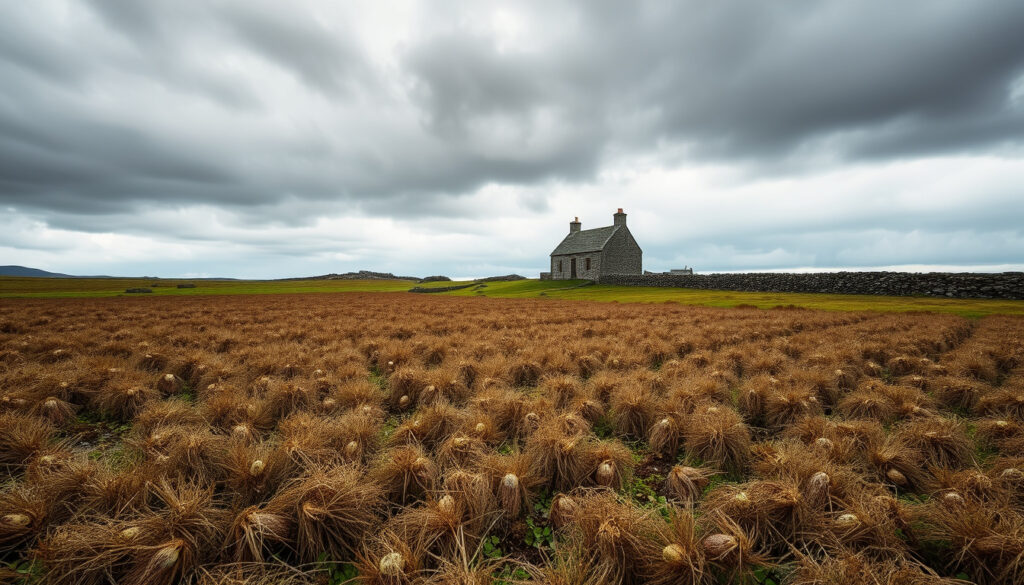
Fields of Athenry Lyrics: Story, Meaning & Controversy
If you’ve ever found yourself humming along to “The Fields of Athenry” at a wedding, a funeral, or a rugby match, you already know the song carries weight. The story behind those famous lyrics — a man stealing corn for his family, a sentence to Botany Bay, and a lover left behind — is layered with history, politics, and a fair share of debate.
Year written: 1979 ·
Songwriter: Pete St. John ·
Original performer: Paddy Reilly ·
Setting: Great Famine (1845–1852) ·
Notable cover artist: The Dubliners
Quick snapshot
- Written by Pete St. John in 1979 (RTÉ Brainstorm (Irish public broadcaster))
- First recorded by Paddy Reilly (IrishCentral (Irish heritage publication))
- Set during the Great Famine in Athenry, County Galway (RTÉ Brainstorm (Irish public broadcaster))
- Whether the song was intended as a political republican anthem (Wikipedia (open-source encyclopedia))
- The exact meaning of “Trevelyan’s corn” in the original lyric (Wikipedia (open-source encyclopedia))
- How closely the specific plot of stealing corn matches a real convict case (Wikipedia (open-source encyclopedia))
- 1845–1852: Great Famine — the song’s setting (RTÉ Brainstorm (Irish public broadcaster))
- 1979: Pete St. John writes the song (RTÉ Brainstorm (Irish public broadcaster))
- 1990s–present: Adopted by republican causes (French Wikipedia (open-source encyclopedia))
- Continued debate over its classification as a “rebel song” (RTÉ Brainstorm (Irish public broadcaster))
- Likely to remain a staple at Irish sporting events and funerals (RTÉ Brainstorm (Irish public broadcaster))
Nine facts about the song’s origins, its characters, and its cultural footprint, one pattern: the song is a fictional story grounded in real famine-era horrors.
| Label | Value |
|---|---|
| Songwriter | Pete St. John (Irish folk musician) |
| Year released | 1979 |
| Original performer | Paddy Reilly |
| Setting | Athenry, County Galway, during the Great Famine (1840s) |
| Main character | Michael — fictional famine victim |
| Historical figure referenced | Charles Trevelyan, British civil servant |
| Length of typical version | Approximately 4 minutes |
| Most famous cover | The Dubliners (1983) |
| Genre | Irish folk ballad |
What is the story behind the song “The Fields of Athenry”?
Setting during the Great Famine
- The song is set during the Great Famine (1845–1852) in and around Athenry, County Galway. Pete St. John wrote the lyrics and music in 1979, drawing on Ireland’s collective memory of starvations, evictions, and mass emigrations (RTÉ Brainstorm (Irish public broadcaster)).
The famine killed roughly one million people and forced a million more to flee Ireland. Against this backdrop, St. John built a personal tragedy.
The plot: Michael and the stolen corn
- The lyrics tell the story of Michael, a fictional man who steals corn from the stores of Charles Trevelyan — the British civil servant in charge of famine relief — to feed his starving family. He is caught, sentenced, and transported to a penal colony in Botany Bay, Australia. The narrator, written from the perspective of his lover, recounts the scenes at the prison wall and the ship’s departure (RTÉ Brainstorm).
Michael’s crime — stealing Trevelyan’s corn — is not a random plot device. It taps into the historically documented reality that Ireland continued to export grain and livestock to Britain even as its people starved.
Historical inspiration and artistic license
- The specific characters are fictional. Folklorist John Moulden found no evidence linking the story to an 1880s broadsheet ballad, a claim that surfaced in the mid-1990s. Pete St. John confirmed he wrote both the music and lyrics (The Great Irish Songbook (authoritative documentary project)). What is real: the famine, the figure of Trevelyan, and the practice of transporting convicts to Australia.
The implication: the song works as a historical fable — emotionally true even if the specific court case never existed.
Who originally sang The Fields of Athenry?
Paddy Reilly: the first recording
- Paddy Reilly, an Irish folk singer, first recorded and released the song in 1979. It became a hit in Ireland and a standard in the folk repertoire (IrishCentral (Irish heritage publication)).
The Dubliners’ iconic version
- The Dubliners, an Irish folk band with decades of history, released their version in 1983. It is often cited as the definitive arrangement. With Paddy Reilly having joined the band by then, this recording brought the song to a global audience (RTÉ Brainstorm (Irish public broadcaster)).
Other notable covers and artists
- Dropkick Murphys, an American Celtic punk band, recorded a driving version. Ronan Tynan, a tenor, gave it a classical treatment. Even online fan recordings number in the thousands. The song’s chorus — “Low lie the Fields of Athenry” — is notoriously easy to sing in a crowd (RTÉ Brainstorm (Irish public broadcaster)).
What this means: the song has no single “official” version. Reilly and The Dubliners share the crown.
What is Trevelyan’s corn?
Charles Trevelyan’s role during the famine
- Charles Trevelyan was the British civil servant who oversaw the relief effort during the Great Famine. His policies are widely condemned by modern historians. He believed the famine was a natural mechanism to reduce overpopulation and saw the Irish as “lazy.” The phrase “Trevelyan’s corn” in the lyrics references the grain stores he controlled (Wikipedia (open-source encyclopedia)).
The song turns a policy name into a villain. Audiences who know nothing about British famine administration instantly understand Trevelyan as the face of a cruel system.
The meaning of “corn” in the lyrics
- In 19th-century Irish and British English, “corn” meant any grain crop — likely wheat or oats, not maize. During the famine, Ireland exported large amounts of wheat and oats to Britain while people starved. When St. John wrote “Trevelyan’s corn,” he referenced this export scandal (Wikipedia (open-source encyclopedia)).
Why Trevelyan became a symbol of British neglect
- The line “against the Crown” seals Trevelyan as an agent of the British state. He represents a system that prioritized English markets over Irish lives. For many Republican listeners, that makes him a natural target for the song’s anger.
The pattern: Trevelyan’s name functions as a historical shorthand — not just a landlord, but the machinery of empire.
Is “Fields of Athenry” a true story?
Fictional characters, historical circumstances
- No. The characters Michael and his lover are invented. Pete St. John told IrishCentral he was inspired by “the potato famine in Ireland … it’s that simple” (IrishCentral (Irish heritage publication)). The suffering, the hunger, and the transportation are historically accurate.
Facts about transportation during the famine
- Transportation to penal colonies like Botany Bay was practiced in Ireland well before the 1840s, though it was in decline by the peak of the famine. Still, it remains a powerful image of exile — central to the song’s enduring appeal (RTÉ Brainstorm (Irish public broadcaster)).
The real town of Athenry
- Athenry is a market town in County Galway. It was hit hard by the famine, and its medieval walls and castle make for a cinematic setting in the story. The town has embraced the song (its local GAA club uses the chorus), even though the characters are fictional.
The catch: a true song can still be a fictional story if the emotions are real.
Why are The Fields of Athenry controversial?
Association with Irish republicanism and the IRA
- The song has been adopted by Irish republican and nationalist groups. It has been played at funerals of IRA members, including hunger striker Bobby Sands, and sung at Republican rallies. Some sports crowds have adapted the lyrics to include lines about Sinn Féin and the IRA — alterations that exist only in crowd versions, not in the original text (French Wikipedia (open-source encyclopedia)).
Use at funerals and political events
- It is now one of the most frequently played songs at Irish funerals, national and Republican alike. Its theme of “loss and longing” fits mourning contexts. Still, the same melody that comforts grieving families can be used to open a political rally — creating the controversy.
Debate over the song’s intent
- Critics label it a “rebel song.” Supporters call it a universal lament for all famine victims. Pete St. John never wrote it as an IRA anthem — his subject was the famine, period. The Irish government and mainstream musicians typically treat it as a folk ballad, not a call to arms. But once a song is in the public’s hands, the author’s intent no longer fully controls its meaning (RTÉ Brainstorm (Irish public broadcaster)).
The song’s emotional clarity — a man steals to feed his child, a system crushes him — makes it powerful. That same clarity makes it easy to weaponize for political ends.
The pattern: the song’s power lies in its simplicity, which is exactly why it can be pulled into opposing narratives.
Which Irish song is most often played at funerals?
Common funeral songs in Irish tradition
- “The Fields of Athenry” is one of the top songs played at Irish funerals. It competes with “Danny Boy,” “The Isle of Innisfree,” and “Amhrán na bhFiann” for airtime. The common thread: separation, exile, and love that endures across the ocean of death (RTÉ Brainstorm (Irish public broadcaster)).
Why this matters: when a song crosses from entertainment to ritual, it gains a kind of authority no critic can touch.
What are Pro IRA songs?
List of well-known Irish republican songs
- Pro-IRA songs include “The Men Behind the Wire,” “Go On Home British Soldiers,” “The Broad Black Brimmer,” and “Come Out Ye Black and Tans.” These explicitly celebrate Republican militants. “The Fields of Athenry” is often grouped with them in online discussions, though its creators did not put it in that category.
How “Fields of Athenry” fits within that category
- It fits via reinterpretation, not origin. The mention of “Trevelyan’s corn,” “against the Crown,” and the transportation sentence allows Republican listeners to read current politics into a 150-year-old injustice. The writer intended famine grief; the crowd makes it rebel song.
Legal and social debates around such songs
- In the UK, songs classified as “pro-IRA” can be banned from public airplay under broadcasting guidelines. The BBC has faced complaints for playing “The Fields of Athenry” in sporting contexts, with critics calling it a breach of neutrality. No formal UK ban exists for this song, but the conversation remains live.
The implication: classification is a power struggle, not a metadata field.
Timeline
- 1845–1852 — Great Famine in Ireland. Charles Trevelyan oversees relief; grain exports from Ireland to Britain continue during mass starvation (Wikipedia (open-source encyclopedia)).
- 1979 — Pete St. John writes “The Fields of Athenry.” Paddy Reilly records the first version (RTÉ Brainstorm).
- 1983 — The Dubliners release their influential cover, bringing the song to a wider audience (IrishCentral).
- Mid-1990s — A false claim surfaces that the lyrics were taken from an 1880s broadsheet. Pete St. John and folklorist John Moulden refute it (The Great Irish Songbook (authoritative documentary project)).
- 1990s–2000s — Song gains popularity at Irish funerals and becomes associated with republican causes (French Wikipedia (open-source encyclopedia)).
- 2010s–present — Debate continues over its classification as an IRA song; remains a staple of Irish folk music and sport (RTÉ Brainstorm).
Confirmed facts vs. what’s unclear
Confirmed facts
- The song was written in 1979 by Pete St. John (RTÉ Brainstorm).
- Paddy Reilly recorded the first version (IrishCentral (Irish heritage publication)).
- Charles Trevelyan was a real British official during the famine (Wikipedia (open-source encyclopedia)).
What’s unclear
- Whether the song was intended as a political republican anthem (Wikipedia (open-source encyclopedia)).
- The exact source of Trevelyan’s quoted remarks about the famine.
- How closely the specific plot of stealing corn matches any real convict case.
- Whether the song’s setting is definitively tied to a specific historical event in Athenry.
“It is about the potato famine in Ireland … it’s that simple.”
— Pete St. John, as told to IrishCentral
“The song’s central crime is stealing corn from Lord Trevelyan’s stores, which ties it to the historical memory of British famine administration.”
— RTÉ Brainstorm
For anyone navigating the song’s dual identity — folk ballad versus political anthem — the choice is clear: accept it as a piece of historical fiction about real suffering, or watch others rewrite its meaning with every new chorus. The melody is powerful enough to carry both.
Related reading: **Fields of Athenry: the story of the song and its sporting afterlife** · **The Fields of Athenry: The Great Irish Songbook**
ca.wikipedia.org, pt.wikipedia.org, reddit.com, songmeanings.com, decs.abcdef.wiki, da.wikipedia.org, youtube.com
Listeners who appreciate the historical depth of ‘Fields of Athenry’ may also enjoy the similarly controversial Irish folk ballad Black Velvet Band.
Frequently asked questions
What exactly does “low lie the fields” mean in the lyrics?
“Low lie” refers to the physical landscape of the fields around Athenry — lying low, possibly fallow or covered in mist or snow. It functions as a pastoral lament: the fields that once sustained people now lie empty.
Is there an official music video for The Fields of Athenry?
No official music video exists for the original 1979 recording, but many unofficial lyric videos and live performance clips exist on platforms like YouTube. The Dubliners’ 1983 performance often stands in as a de facto visual.
What key is The Fields of Athenry typically sung in?
Most recordings use the key of G major or D major. The melody uses a standard folk ballad structure with a rising octave jump in the chorus, making it accessible for untrained voices.
Did Pete St. John write any other famous songs?
Yes. Pete St. John is also known for “The Rare Ould Times” and “The Ferryman.” “The Rare Ould Times” has been recorded by The Dubliners, Paddy Reilly, and many others.
Are there any modern pop covers of The Fields of Athenry?
Dropkick Murphys released a well-known Celtic punk version in 2001. The Decemberists performed a folk-rock rendition. Additionally, the song appears in many online covers by amateur and professional musicians across genres.
Why is the song named after Athenry specifically?
Pete St. John said he chose Athenry because its medieval walls and tower made it a recognizable and evocative place name. The town itself had no special relationship to the writer, but its history with the famine gave it symbolic weight.
Can I use The Fields of Athenry lyrics in a public performance?
Yes, for most non-commercial uses. The song’s copyright is held by Pete St. John and his publisher, so a license is required for commercial recordings or public broadcasts. A single public performance at a church or community event is generally fine.
What chord progression is used in The Fields of Athenry?
The standard progression in G major is: G – D – C – G – D – G. The chorus modulates up, typically adding Em and Am. The pattern is simple enough for beginners to follow.
More related posts
 Cliffs of Moher Student Fall: Inquest Details on Puddle Slip
 Lily O’Brien Chocolates – Buying Guide for Ireland and UK
 Sunglasses Shop Near Me: Best Brands, UV vs Polarized Guide
 Culloden Estate and Spa – Holywood’s Luxury Spa Hotel
 What Is a Binder in Cooking? Definition & Examples
 How to Delete Snapchat Permanently: Step-by-Step Guide (2025)
 38 in UK Size: Shoes & Clothes US EU Charts
 Mens Watches Ireland Sale 2025: Best Deals & Retailers