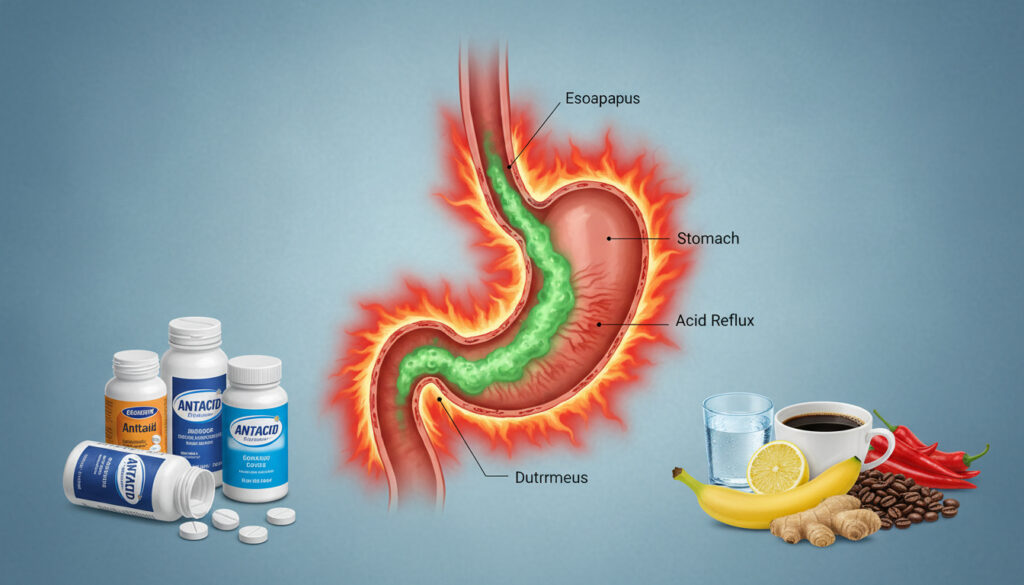
What Is Acid Reflux – Symptoms, Causes, Treatments and Relief
Acid reflux occurs when stomach acid flows backward into the esophagus, creating a burning sensation that affects millions of adults weekly. This happens when the lower esophageal sphincter—the muscular valve at the base of the esophagus—relaxes inappropriately or weakens, allowing digestive contents to irritate the delicate lining of the food pipe.
While occasional reflux is normal and affects most people sporadically, frequent episodes signal a chronic condition known as gastroesophageal reflux disease (GERD). Understanding the distinction between sporadic heartburn and persistent acid reflux helps determine when lifestyle adjustments suffice and when medical intervention becomes necessary.
What Is Acid Reflux?
Definition
Backflow of stomach acid into the esophagus due to lower esophageal sphincter relaxation.
Primary Causes
- Weak or faulty LES
- Hiatal hernia
- Obesity and pregnancy
Key Symptoms
- Heartburn and regurgitation
- Chest discomfort
- Difficulty swallowing
Fast Relief
- Antacids within 5 minutes
- Staying upright
- Avoiding trigger foods
- Approximately 20% of adults experience symptoms weekly.
- Episodes become GERD when heartburn occurs more than twice per week.
- The lower esophageal sphincter serves as the primary anatomical barrier.
- Lifestyle modifications prove effective in roughly 70% of cases.
- Between 20% and 30% of sufferers progress to chronic GERD.
- No definitive cure exists; management focuses on symptom control.
- Severe chest pain requires cardiac differentiation.
| Aspect | Clinical Detail |
|---|---|
| Medical Term | Gastroesophageal reflux |
| Primary Mechanism | Lower esophageal sphincter relaxation |
| Typical Onset | Post-meal or when lying down |
| GERD Threshold | Symptoms >2 times per week |
| Adult Prevalence | ~20% weekly occurrence |
| Progression Rate | 20-30% develop GERD |
| First-Line Treatment | Lifestyle modification |
| Antacid Relief Time | Less than 5 minutes |
What Causes Acid Reflux?
The Lower Esophageal Sphincter Mechanism
The condition fundamentally stems from a weak or faulty lower esophageal sphincter that fails to close properly after food enters the stomach. According to the Mayo Clinic, this muscular ring normally opens to allow swallowed food into the stomach and closes to prevent backflow. When this mechanism fails, stomach acid flows back into the esophagus, irritating the lining and producing symptoms.
Anatomical and Physiological Factors
Hiatal hernia, where the upper stomach bulges through the diaphragm, frequently contributes to sphincter dysfunction. Obesity and pregnancy increase abdominal pressure, forcing acid upward. Delayed stomach emptying also exacerbates the condition by extending the window during which reflux can occur. These factors explain why certain populations face elevated risk.
While spicy and fatty foods commonly trigger symptoms, individual responses vary significantly. Keeping a detailed food diary helps identify specific personal triggers beyond general categories, as Mount Nittany Health suggests monitoring carbonated drinks and large meal portions.
Dietary and Behavioral Triggers
Large or rich meals, eating too quickly, and lying down soon after eating provoke episodes. Carbonated beverages increase stomach pressure, while bending over or reclining post-meal allows gravity to work against the sphincter. Cleveland Clinic notes that pharmaceutical research continues examining these mechanisms, similar to how markets track Eli Lilly Share Price for related therapeutic developments.
Pregnancy hormones relax the LES while the growing fetus increases abdominal pressure. Similarly, excess body weight raises internal pressure, explaining why weight loss often reduces symptom frequency significantly.
What Are the Symptoms of Acid Reflux?
Core Manifestations
Heartburn dominates the clinical picture—a burning sensation in the chest typically worsening after eating, at night, when lying down, or bending over. UC Davis Health identifies regurgitation of sour liquid or food into the throat as equally common. Chest or upper abdominal pain frequently accompanies these sensations.
Atypical and Extra-Esophageal Signs
Difficulty swallowing, known medically as dysphagia, indicates narrowing or irritation of the esophagus. Many patients report a persistent lump-in-throat sensation, chronic cough, hoarse voice, or sore throat without obvious infection. The National Institute of Diabetes and Digestive and Kidney Diseases notes that asthma-like symptoms, shortness of breath, nausea, bloating, and bad breath sometimes represent the only symptoms, particularly in atypical presentations.
Severe chest pain radiating to the arm, neck, or back requires immediate medical evaluation to rule out cardiac events, as acid reflux can produce similar sensations.
How Is Acid Reflux Treated?
Immediate Relief Options
Antacids provide relief in under five minutes by neutralizing stomach acid, though patients with kidney issues should exercise caution due to potential interactions. H2 blockers—including famotidine (Pepcid), cimetidine (Tagamet), nizatidine (Axid), and ranitidine (Zantac)—reduce acid production and work faster when taken preventively. GoodRx confirms that milk and bananas offer limited evidence for relief but remain popular home remedies.
Long-Term Management Strategies
Lifestyle modifications constitute first-line treatment. Eating smaller, frequent meals slowly; avoiding carbonated drinks; and remaining upright for several hours after eating prove effective. Elevating the head while sleeping and loosening tight clothing reduce nighttime episodes. Weight loss and smoking cessation address underlying causes. The American College of Gastroenterology recommends consulting physicians if over-the-counter options fail after several weeks.
How Does Acid Reflux Progress Over Time?
-
Burning sensation begins shortly after eating, particularly following large or trigger-heavy meals.
-
Symptoms peak when lying down as gravity no longer assists in keeping stomach contents down.
-
Recurrent episodes establish a pattern, distinguishing occasional heartburn from persistent reflux.
-
Frequency exceeding twice weekly for extended periods indicates progression to gastroesophageal reflux disease.
-
Chronic irritation may lead to esophageal strictures, vocal cord damage, or Barrett’s esophagus over months to years.
What Is Certain About Acid Reflux and What Remains Unclear?
| Established Facts | Areas of Uncertainty |
|---|---|
| Weak lower esophageal sphincter function causes reflux | Why specific foods trigger some individuals but not others |
| Lifestyle modifications resolve symptoms in 70% of cases | Complete reversibility of chronic esophageal damage |
| No definitive cure exists; management controls symptoms | Exact timeline for progression to Barrett’s esophagus |
| Heartburn >2x weekly indicates GERD | Direct causative role of stress versus correlation |
| Obesity and pregnancy are established risk factors | Variation in individual medication response rates |
How Widespread Is Acid Reflux and Who Faces Higher Risk?
Approximately twenty percent of adults experience acid reflux symptoms at least weekly, making it one of the most common gastrointestinal complaints. The condition affects all age groups but shows higher prevalence among overweight individuals, pregnant women, and those over forty. Men and women experience similar rates, though pregnancy creates a temporary window of elevated risk for women due to hormonal changes and mechanical pressure.
The economic and quality-of-life impact remains substantial, with many sufferers altering sleep positions and dietary habits to accommodate symptoms. While Under 17 World Cup Winners History documents athletic achievement across generations, acid reflux similarly crosses demographic boundaries, though athletes may experience exercise-induced reflux differently than the general population.
Geographic and cultural dietary patterns influence incidence rates, with populations consuming high-fat, spicy, or large-portion diets reporting higher frequencies. However, the underlying physiological mechanism—lower esophageal sphincter relaxation—remains consistent across populations.
What Do Medical Authorities Say About Acid Reflux?
“Acid reflux occurs when stomach acid flows back into the tube connecting your mouth and stomach. This backwash can irritate the lining of your esophagus.”
Mayo Clinic
“Most people can manage the discomfort of GERD with lifestyle changes and over-the-counter medications. But some GERD cases might need stronger medications or surgery to ease symptoms.”
Cleveland Clinic
Key Takeaways on Acid Reflux
Acid reflux results from stomach acid flowing back into the esophagus when the lower esophageal sphincter weakens or relaxes inappropriately. While common and usually manageable through lifestyle changes and over-the-counter medications like antacids and H2 blockers, the condition requires medical attention when symptoms occur more than twice weekly, interfere with swallowing, or cause severe chest pain. No cure exists, but consistent management prevents progression to GERD and serious complications including esophageal strictures or Barrett’s esophagus. Early intervention and trigger identification remain the most effective strategies for long-term control.
Frequently Asked Questions
What foods cause acid reflux?
Large or rich meals, carbonated drinks, and trigger foods like spicy, fatty, or acidic items commonly provoke symptoms. Eating too quickly or lying down soon after meals also contributes to episodes.
What helps acid reflux fast?
Antacids provide relief in under five minutes. Standing upright, loosening tight clothing, and changing positions can also help. Some find temporary relief from milk or bananas, though evidence remains limited.
Can acid reflux be cured?
No definitive cure exists. However, symptoms can be effectively managed through lifestyle modifications, over-the-counter medications, and prescription treatments when necessary, preventing progression to serious complications.
Is acid reflux dangerous?
Occasional reflux poses little danger. Chronic, untreated GERD can lead to esophageal damage, strictures, vocal cord issues, or rarely Barrett’s esophagus and esophageal cancer, requiring medical monitoring.
Does milk help acid reflux?
Milk may provide temporary relief by coating the esophagus, but it stimulates acid production later. Evidence for its effectiveness remains limited compared to antacids or H2 blockers.
Why is acid reflux worse at night?
Lying down eliminates gravity’s assistance in keeping stomach contents down. Eating within two to three hours of bedtime exacerbates nighttime symptoms, as does sleeping flat.
More related posts
 Cold and Flu Tablets: Best Ireland Picks Compared
 iPhone 17 Pro Max Price Ireland: Best Deals & Trade-Ins
 Road Traffic Accident Cork Today: Live Alerts & Safety Guide
 12 Years a Slave: True Story, Cast & Where to Watch
 โปรแกรมบอลวันนี้: Today’s Football Schedule & Live Channels
 Real Techniques Brush Set Review: Are They Worth It
 PSG vs Aston Villa Stats – Full Head-to-Head Breakdown
 Cast of Gen V – Actors Characters and Updates Guide