Bars in Reykjavik Iceland: Pint Prices, Ice Bar, and Nightlife
You walk into a cozy bar on Laugavegur, order a pint of Iceland’s finest lager, and the bartender says a number that makes you blink twice. Yes, alcohol in Iceland is famously expensive — but not all of it has to break your budget. This guide breaks down real pint prices, the best happy hour apps to have on your phone, and whether that famous ice bar experience is actually worth the entry fee.
Average pint of beer: $11 (1,500–2,000 ISK) ·
Happy hour pint price: $6–8 (800–1,200 ISK) ·
Alcohol tax rate: 54% excise duty + 24% VAT ·
Estimated bars in Reykjavik: Over 100 ·
Ice bar entry fee: $35 (5,000 ISK)
Quick snapshot
- Happy hour is widely available, particularly on Laugavegur and Austurstræti (Guide to Iceland (travel guide operator))
- Prikið bar serves happy hour beer at 800 ISK (~$6) (What’s On in Reykjavík (local events guide))
- Alcohol carries a combined excise duty of 54% plus 24% VAT (Guide to Iceland (travel guide operator))
- Exactly how many bars operate in Reykjavik — estimates vary
- Whether the ice bar experience justifies the $35 entry fee — a subjective call
- Precise 5-day alcohol budget estimates vary greatly by personal habits
- Most happy hours run from 15:00–17:00 through 18:00–20:00 (Iceland Review (English-language magazine))
- Veður bar named Best Happy Hour 2025 by Grapevine, with beer-and-wine discounts from 14:00 (The Reykjavík Grapevine (independent culture paper))
- For travelers: plan around happy hour windows — they are your best strategy for affordable nights out
- For budget travelers: buying beer from Vínbúðin (state liquor stores) is dramatically cheaper than bars
| Fact | Value |
|---|---|
| Average pint price | $11 (1,500–2,000 ISK) |
| Alcohol tax | 54% excise + 24% VAT |
| Number of bars | Over 100 |
| Ice bar entry fee | $35 (5,000 ISK) |
| Typical daily budget (alcohol) | $40–60 |
| Legal drinking age | 20 (beer/wine in bars: 18) |
The pattern: these six figures capture the baseline costs and rules every visitor needs before stepping into a Reykjavik bar.
Are there pubs in Reykjavik, Iceland?
Reykjavik packs an outsized nightlife punch for a capital of its size. The city is home to over 100 bars and pubs, most of them clustered along the main shopping street Laugavegur and the adjacent Bankastræti and Austurstræti strips. The scene is dense, walkable, and far more diverse than its small scale suggests — you’ll find everything from old-school pub dens to sleek cocktail lounges within a five-minute stroll.
Reykjavik’s bar density is comparable to much larger cities, meaning the challenge isn’t finding a bar — it’s deciding which one fits your mood and wallet.
Best bars in Reykjavik
- Prikið (Bankastræti 12) — One of the city’s oldest coffee houses turned bar, known for having the cheapest happy-hour beer at 800 ISK (~$6) according to What’s On in Reykjavík (local events guide).
- Stúdentakjallarinn (Sæmundargata 4) — The student bar in the university basement, offering happy-hour beer at 850 ISK and a lively younger crowd (What’s On in Reykjavík (local events guide)).
- Veður (Lækjargata 2b) — Named Best Happy Hour 2025 by The Reykjavík Grapevine, with beer-and-wine discounts starting at 14:00 every day (The Reykjavík Grapevine (independent culture paper)).
Unique bars and craft beer spots
- Skáli (Aðalstræti 16) — Iceland’s first dedicated craft beer bar, with 20 rotating taps of local and Nordic brews.
- Micro Bar (Veltusund 3) — A tiny basement spot under a restaurant, pouring house-brewed ales from the sister brewery.
- Kaffibarinn (Bergstaðastræti 1) — An iconic red-hut bar that’s part coffee shop, part nightlife institution, famously used as a setting in the film 101 Reykjavík.
Bars for different ages and tastes
- Younger crowds (20s–30s): Stúdentakjallarinn, the dive bars on Tryggvagata, and late-night dancing at Bakarinn.
- Over-30s scene: Ós (wine bar on Frakkastígur), Don Juan vopn (cocktails and live jazz), and Kaldi Bar (relaxed beer hall on Laugavegur).
- Mixed-age live music: Húrra (rock and indie gigs), Gaukurinn (punk and metal since 1982).
The pattern: Reykjavik’s bar scene isn’t about one type of venue — it’s about choosing your micro-neighborhood, and the best strategy is to walk Laugavegur and follow the noise that matches your mood.
How much is a pint of beer in Reykjavik, Iceland?
A standard pint of Icelandic lager costs between 1,500 and 2,000 ISK ($11–15) in most Reykjavik bars. That makes it one of the most expensive pints in Europe — roughly 3x the price of a London pint and 5x the cost of a pint in Prague. But smart timing changes that picture dramatically.
Regular pint prices
- Standard lager (Gull, Viking, Egils): 1,500–2,000 ISK ($11–15) per pint.
- Microbrew / imported beer: 2,000–3,000 ISK ($15–22) per pint.
- House wine (glass): 1,200–1,800 ISK ($9–13).
- Cocktails: 2,500–4,000 ISK ($18–29).
Happy hour deals
During happy hour — typically 15:00 to 19:00 — prices drop significantly. What’s On in Reykjavík (local events guide) reports that the lowest happy-hour beer prices in the 2025 guide are 800 ISK ($6) at Prikið and 850 ISK ($6.50) at Stúdentakjallarinn. Wine drops to as low as 950 ISK ($7) during happy hour. Some bars take it further: Guide to Iceland (travel guide operator) notes that certain venues offer half-price cocktails, house wines, and beers during their discount windows.
Happy hour pricing cuts the effective cost of a beer by 40–50%. For a traveler having three beers, that’s a savings of roughly $12–18 per round compared to full-price after 20:00. The smart move: start drinking at 16:00, not after dark.
Where to find cheap beer
- Prikið — 800 ISK, Bankastræti 12, happy hour runs 16:00–19:00.
- Stúdentakjallarinn — 850 ISK, university basement, early evening discount.
- Veður — beer-and-wine discount from 14:00 to 19:35, second cocktail happy hour after 19:35 (The Reykjavík Grapevine (independent culture paper)).
- Vínbúðin stores — Beer costs roughly 300–500 ISK per can. Buy before 18:00 (weekdays) or 16:00 (weekends).
The catch: happy hour gives you affordable beer, but the window is short — typically 16:00–19:00. After 20:00, you’re paying full price.
Is the ice bar in Reykjavik worth it?
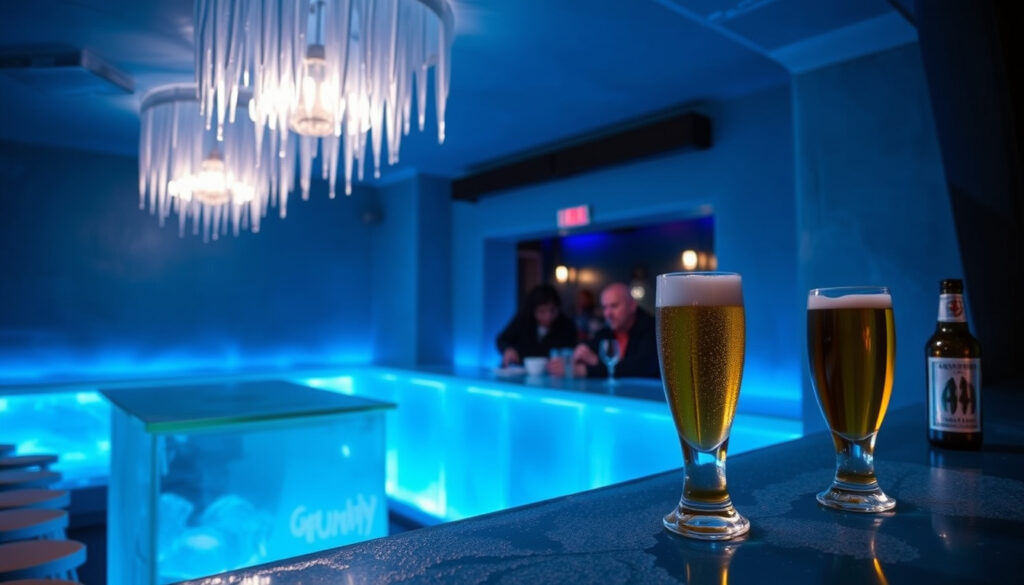
Reykjavik has one dedicated ice bar: Magic Ice Bar (Veltusund 3, in the city center). The concept is straightforward: you pay an entry fee, step into a freezing room where everything — walls, furniture, even the glasses — is carved from ice, and you receive a welcome drink served in an ice glass.
What to expect at Magic Ice Bar
- Entry fee: Approximately 5,000–5,900 ISK ($35–42) per person (Guide to Iceland (travel guide operator)).
- What you get: Thermal overalls (limited sizes), one welcome shot or cocktail in an ice glass, and 15–20 minutes inside the ice room.
- Drinks included: Typically one drink is included in the entry fee; additional drinks cost extra — around 2,000 ISK each.
- When to go: Open from late afternoon to late evening, with timed entry slots.
Dress code and tips
- What to wear: The venue provides thermal ponchos or overalls, but they can be limited in sizes. Wear warm layers — fleece and long pants — underneath.
- Footwear: Closed-toe, warm shoes. The floor is ice, and it can get slippery.
- Timing: Visit early in your trip before you’ve had a few drinks — balance is compromised on ice floors.
- Photography: Cameras and phones work inside; the lighting is often blue/purple for effect.
Alternatives to the ice bar
- Kaffibarinn — An actual piece of Reykjavik’s nightlife history for the same price as the ice bar entry fee.
- Skál! (craft beer cellar) — Spend the entry fee on a flight of Icelandic microbrews instead.
- Vínbúðin picnic: Buy a bottle of Brennivín and some cans of Gull at the state liquor store, find a geothermal-heated bench — total cost: under $20.
- Blue Lagoon / Sky Lagoon: Compare $35 entry to a geothermal spa experience — same price bracket, far longer experience.
Upsides
- Unique photo opportunity — the ice sculptures are genuinely detailed
- Ice glass gives a one-of-a-kind drinking experience
- Short visit (~20 min) so it doesn’t eat your whole evening
- Good conversation starter for the rest of your trip
Downsides
- Entry fee is higher than a full night of happy-hour bar hopping
- Overalls can be limited in larger sizes — you may get cold fast
- Only one drink included — extra drinks are expensive
- Can feel like a tourist trap: you pay $35 to stand in a cold room for 20 minutes
The verdict: If you collect unique experiences and have the budget, Magic Ice Bar is a memorable 20 minutes. For a budget-conscious traveler, the same $35 buys three happy-hour beers and a bowl of lamb soup — a far better use of your money.
Why is alcohol so expensive in Reykjavik?
Two forces drive Reykjavik’s high alcohol prices: heavy taxation and a state monopoly on off-license sales. The government applies a 54% excise duty on top of the standard 24% VAT on all alcoholic beverages. That means a beer that costs 300 ISK to produce ends up with a tax burden of roughly 234 ISK before it ever reaches a bar’s cooler.
Alcohol taxes in Iceland
- Excise duty: 54% on alcoholic beverages (Guide to Iceland (travel guide operator))
- Value Added Tax (VAT): 24% standard rate applied after excise duty
- Combined effective rate: approximately 91% tax on the base price of alcohol
Government monopoly (ÁTVR / Vínbúðin)
The state-run ÁTVR (commonly called Vínbúðin) holds the exclusive right to sell alcoholic beverages above 2.25% ABV in retail stores. These stores operate limited hours: typically 11:00–18:00 on weekdays, 11:00–16:00 on Saturdays, and closed on Sundays. Bars pay wholesale prices from the same monopoly, then add their own markup.
Impact on nightlife
The combination of high taxes and monopoly pricing creates a two-tier drinking culture in Reykjavik. Bar prices are punishing at full retail, but happy hour and Vínbúðin purchases offer escape hatches. The average Icelander drinks less frequently than other Europeans but spends more per occasion — a pattern visitors quickly adopt.
The pattern: Reykjavik’s alcohol pricing isn’t random — it’s a deliberate policy outcome that rewards advance planning and punishes impulse drinking.
How many days in Reykjavik is enough?
For a focused nightlife trip, 2–3 days in Reykjavik is sufficient to hit the main bar streets, experience happy hour at different venues, and decide whether the ice bar is worth your time. If you’re combining city drinking with day trips to the Golden Circle, Blue Lagoon, or the South Coast, plan for 4–5 days.
Suggested itinerary for nightlife
- Day 1: Arrive, check in, walk Laugavegur to scout happy hour venues. Early dinner, then bar hop from 16:00 to 20:00 to catch multiple happy hour windows.
- Day 2: Morning recovery, afternoon visit to Vínbúðin for supplies. Evening bar crawl focused on Grandi and Austurstræti.
- Day 3: Optional ice bar visit (book ahead), then a final night on Bankastræti and Tryggvagata.
Combining city and nature
Reykjavik serves as a base for Iceland’s famous natural attractions. A 4–5 day trip allows for one full-day tour (Golden Circle or South Coast) while still leaving evenings for bar exploration. The trade-off: day tours typically return by 18:00–19:00, which coincides perfectly with happy hour.
Budget considerations
- 3-day alcohol budget (bar-focused): $120–180 (assuming 1–2 happy hour beers per day + 1 full-price cocktail)
- 5-day alcohol budget (mixed activities): $150–250 (more Vínbúðin purchases, fewer bar visits)
- Pro tip: Budget $500–700 total for a 5-day trip including accommodation, food, and alcohol if you’re drinking mostly in bars
The implication: the number of days you need correlates directly with how many bar neighborhoods you want to explore — two days hits the highlights, five days lets you live like a local.
visitorsguide.is, happyhour.is, tripadvisor.com, happyhour.is, icelandreview.com, whatson.is, icelandwithaview.com, reddit.com
For a more detailed look at the city’s bar scene, check out this comprehensive Reykjavik nightlife guide that covers everything from happy hour deals to tipping etiquette.
Frequently Asked Questions
What is the legal drinking age in Iceland?
The legal drinking age in Iceland is 20 for purchasing alcohol from Vínbúðin (state liquor stores). However, the minimum age for drinking beer and wine in bars and restaurants is 18. Bars typically check ID rigorously, so carry your passport or driver’s license.
Can I buy alcohol in grocery stores in Iceland?
No. Grocery stores like Bónus and Krónan only sell low-alcohol beer (under 2.25% ABV). All alcoholic beverages above that threshold must be purchased at Vínbúðin, the state-run liquor store chain. Vínbúðin stores are open limited hours and closed on Sundays.
Do I need to tip in Reykjavik bars?
Tipping is not expected in Iceland. Service charges are included in prices, and bartenders are paid a living wage. If you receive exceptional service, rounding up the bill or leaving small change is appreciated but never required.
Are credit cards accepted in bars?
Yes. Iceland is nearly a cashless society. Credit and debit cards — especially Visa and Mastercard — are accepted everywhere, including bars, pubs, and Vínbúðin. American Express is less common. Carry a card with a chip and PIN for the smoothest experience.
What is the dress code for bars in Reykjavik?
Reykjavik bars are generally casual. Jeans, sneakers, and a nice top or sweater are standard for most venues. Some upscale cocktail bars and clubs may require smarter casual — no sportswear or flip-flops. The key is layering: bars can be warm, but the walk between them is cold.
What is the best area for bar hopping in Reykjavik?
Laugavegur is the epicenter of Reykjavik nightlife, with dozens of bars within a 10-minute walk. For a quieter, craft-cocktail scene, head to the Grandi dock area. The intersection of Bankastræti and Austurstræti offers the densest concentration of pubs and late-night venues. All areas are walkable within 15–20 minutes.
Related on this site
More related posts
 Leeds United vs Tottenham Standings – Current Positions, Form and H2H Records
 International Women’s Day 2026: Give To Gain Theme & Events
 Treadmill for Sale Ireland – Best Home Treadmills 2025
 166 cm in feet: exact conversion, rounding, and height context
 Penneys Gift Card Balance: How to Check Online, by Phone & More
 Team Europe Ryder Cup 2025: Full Roster & Captain Picks
 Task (TV Series) Cast: Main Actors & Season 2 Updates
 The Kingsley Hotel Cork: 4-Star Riverside Retreat