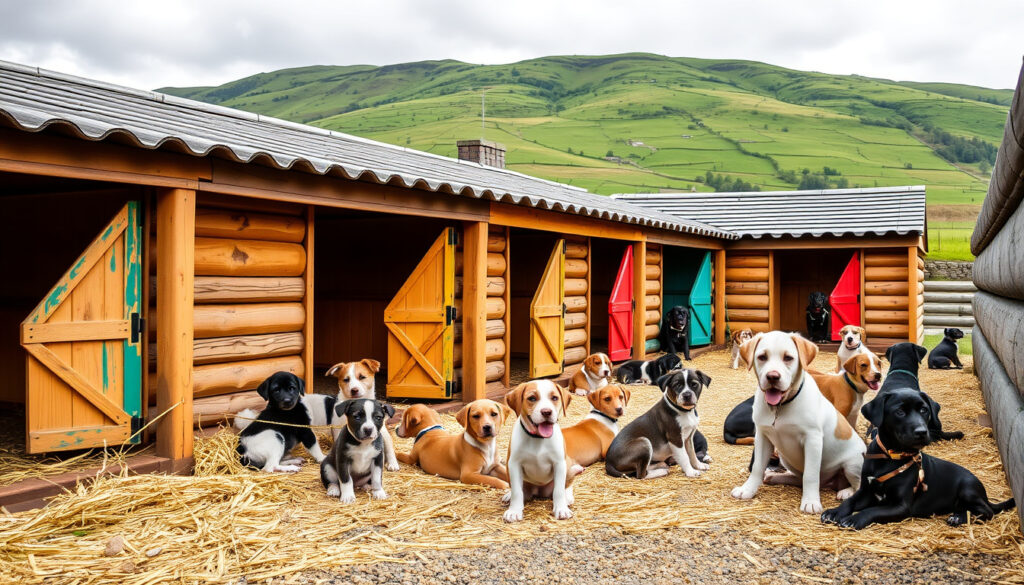
Dogs for Sale Northern Ireland: Where to Find Puppies & Rescue Dogs
Anyone who has scrolled through puppy listings in Northern Ireland knows the mix of excitement and unease: lovely photos, low prices, and little information about where the dog came from. The decisions that follow — marketplace or breeder, puppy or rescue, £500 or £1,500 — are easier when you know the rules and prices that actually apply here.
Active listings on Gumtree (NI): 68+ ads ·
Animal ads on DoneDeal (all Ireland): 3,912+ ·
Average cross-breed puppy price: £500–£700 ·
Rescue adoption fee: £150–£250
Quick snapshot
- Puppies in Northern Ireland cannot be sold before eight weeks old (DAERA (NI regulator)).
- Puppies must be microchipped before eight weeks and registered to the breeder or seller (The Royal Kennel Club (UK canine organisation)).
- The exact number of active breeders in Northern Ireland is not published anywhere.
- Whether a cheap ad is a legitimate sale cannot be judged from the listing alone.
- Adoption wait times vary by organisation and by season.
- Northern Ireland has been considering rules to align with the rest of the UK on third-party puppy and kitten sales (BBC News NI (regional broadcaster)).
- England’s Lucy’s Law, in force since 6 April 2020, already bans commercial third-party sales of puppies under six months (UK Government (national regulator)).
- A proposed NI scheme would require anyone selling, giving away or otherwise transferring puppies or kittens to register with their local council, pay a fee and have their details published (Northern Ireland Executive (devolved government)).
Six numbers, one pattern: the verified route costs more upfront, and the cheapest listings carry the least accountability.
| Metric | Value | Source |
|---|---|---|
| Dog ads on Gumtree (Northern Ireland) | 68+ | Gumtree NI (classified marketplace) |
| Animal ads on DoneDeal (all Ireland) | 3,912 | DoneDeal (classified marketplace) |
| Typical cross-breed puppy price | £500–£700 | Pets4Homes (UK pet marketplace) |
| Typical Kennel Club registered puppy price | £1,000–£1,500 | Irish Kennel Club (official breed registry) |
| Rescue adoption fee range | £150–£250 | USPCA (NI animal welfare charity) |
| Breeds recognised by the Irish Kennel Club | Over 200 | Irish Kennel Club |
Where can I find dogs for sale in Northern Ireland?
Most buyers start online, and the options split into two different worlds: open marketplaces where anyone can post, and directories that attach a named breeder to every pup.
Online marketplaces (Gumtree, DoneDeal)
- DoneDeal, the Republic of Ireland’s biggest classified site, lists 3,912+ animal ads across the island (DoneDeal (classified marketplace)).
- Pets4Homes, a UK-wide pet marketplace, also lists Northern Ireland sellers (Pets4Homes (UK pet marketplace)).
- Gumtree’s Northern Ireland section mixes breeder ads, rehoming posts and adult dogs.
The appeal is speed and volume; the weakness is verification. These platforms do not certify that a seller is a legitimate breeder, and the UK Government lists casual, meet-anywhere arrangements among the recognised warning signs of illicit puppy sales (UK Government (national regulator)).
Breeder directories and kennel clubs
- For a directory route, start with the Irish Kennel Club’s breeder search tool and verify any registration number directly with the club.
- A registered breeder has a name, a registration number and a record with the club.
- A directory listing is not a warranty, but it adds a named person to contact.
That accountability is exactly what marketplace ads lack. A breeder who is registered has something to lose.
Local pet shops, classified ads and commercial breeders
- Local newspapers and village noticeboards still carry puppy ads, usually from small or hobby breeders.
- Commercial breeders such as Designer Pups by Annabel in Co. Fermanagh advertise directly to buyers.
- Ask any commercial seller whether they hold a breeding licence before you visit.
Naming a selling operation is not the same as verifying it. The licence question — and the willingness to answer it in writing — separates a registered business from an ad with no address behind it.
What small dog breeds are available for sale in Northern Ireland?
Small breeds dominate the cute end of NI listings, and the variety is real even when the labels get creative.
Popular small breeds (Cockapoo, Dachshund, Chihuahua)
- Cockapoos, Dachshunds and Chihuahuas are among the small breeds most frequently advertised on NI marketplaces (Gumtree NI (classified marketplace)).
- Toy and miniature varieties of poodles and Yorkshire terriers are commonly offered by specialist breeders.
- Labels such as “teacup” and “micro” have no standard definition, so treat them as marketing until you have seen the parents.
Availability follows seasons more than breeds. A breeder with several litters ready at once deserves extra questions about how many breeding bitches are on site.
Puppy availability from breeders
- Registered breeders usually produce a limited number of litters per year, which means waitlists are common.
- Buyers should see the full litter with the mother at the place where the puppies were raised (PDSA (UK veterinary charity)).
- If a seller will not let you visit the premises, treat it as a reason to walk away.
Small dog care considerations
- Size and temperament vary widely within a breed; the parents’ behaviour is the best predictor.
- Small breeds often live into their teens, so the commitment outlasts the puppy phase.
- Ask for the microchip certificate and vaccination record before you hand over money.
What this means: the breed name tells you less than the specific parents do. A Chihuahua can be tiny or surprisingly sturdy depending on its lines, so meet the mother and ask the breeder about health testing.
Are there rescue dogs for adoption in Northern Ireland?
Rescue is the route where a dog’s history is at least partially documented before you commit.
Rescue organisations operating in NI
- The USPCA rehomes dogs across Northern Ireland and investigates animal welfare cases (USPCA (NI animal welfare charity)).
- Dogs Trust runs a rehoming operation in Northern Ireland as part of its national adoption scheme (Dogs Trust (UK dog welfare charity)).
- Independent local rescues and council pounds also rehome dogs throughout the region.
Adoption process and fees
- Adoption fees typically range from £150 to £250, usually covering vet checks, microchipping and often neutering (USPCA).
- Most NI rescues require an application and a home check before you meet the dog.
- Rescue dogs are often adults, so their size and temperament are already visible.
Rescue staff have watched the dog eat, sleep and react to strangers. That observed behaviour is information no marketplace ad can provide, and it is included in the adoption fee.
Comparing adoption with buying
- Adoption costs less upfront and includes vet work already done.
- You choose from the dogs currently in care rather than requesting a specific breed.
- Shelter staff can describe behaviour they have observed, something no classified ad can do.
The trade-off: rescue limits your choice of breed and puppy age, but it replaces guesswork with observed behaviour — and the fee covers real vet work, not a seller’s profit margin.
How much does a dog cost in Northern Ireland?
Prices in NI cluster into three bands, and the cheapest band is where buyer beware matters most.
Price ranges by breed type
- Cross-breed puppies typically sell for £500–£700 on NI marketplaces (Pets4Homes (UK pet marketplace)).
- Registered puppies typically command £1,000–£1,500, even in marketplace listings (Gumtree NI listings).
- The cheapest route is adoption, where fees include vet checks and microchipping rather than a breeder’s margin.
Can you buy a dog for under £500?
- Listings under £500 do appear, especially for mixed breeds and adult dogs.
- A price far below the cross-breed norm can signal health or welfare problems, or a rushed sale.
- The UK Government treats bargain-priced, meet-anywhere deals as a recognised warning sign of illicit puppy sales (UK Government (national regulator)).
Hidden costs beyond the asking price
- Vaccinations, microchipping, neutering and initial equipment add several hundred pounds to the first year.
- Confirm that the microchip is registered to you after the sale, since that is the record the authorities rely on.
- Food, insurance and routine vet care typically outstrip the purchase price within the first year.
A bargain puppy is the most expensive dog you can buy when the savings come from skipped vet care. Eight weeks of feeding, worming and vaccinations happen before the first penny changes hands; a price far below the market norm means something was cut.
The implication: set your budget in two parts — the purchase price, and the first-year cost of keeping the dog healthy. Most NI buyers who struggle are not overpaying; they are under-budgeting for what comes after.
What does Kennel Club registration mean for a dog in Northern Ireland?
Kennel Club registration is the most misunderstood phrase in puppy ads. It proves lineage, not health.
IKC registration explained
- The Irish Kennel Club is the official organisation for purebred dog registration in Ireland (Irish Kennel Club (official breed registry)).
- Registration documents confirm a dog’s parentage and pedigree line.
- Not every puppy sold in NI is IKC-registered; many crossbreeds and commercial litters are not.
Benefits and limits of registered dogs
- A registered pedigree gives you predictable markers for size, coat and temperament.
- Registered breeders are accountable to IKC rules and can be contacted through the club.
- Registration does not guarantee that the puppy was well raised or free of inherited health problems.
How to verify registration
- Ask to see the registration certificate and check the breeder’s name against it.
- Contact the Irish Kennel Club directly if the paperwork looks inconsistent.
- Confirm separately that the microchip details match the dog’s identity before you transfer ownership.
The implication: registration answers “who are this dog’s parents?”, not “is this dog healthy?”. Use it as one layer of verification, alongside the mother-and-litter test and the microchip records.
Registration documents the family tree; adoption documents the day-to-day dog. Deciding which kind of information matters more to your home is the real buying decision in Northern Ireland.
Buying from a breeder vs. adopting a rescue dog
Both routes end with a dog in your home; they differ in what you control, what you pay and what risk you carry.
Upsides
- Buying from a registered breeder gives you pedigree, puppy age and a named, accountable seller.
- Adoption fees (£150–£250 from the table above) include vet checks, microchipping and often neutering.
- Rescue staff have observed the dog’s behaviour and can match temperament to your home.
- The legal floor — eight weeks old and microchipped — protects buyers who verify paperwork.
Downsides
- Marketplace purchases carry the most risk: no breeder verification and little legal recourse if things go wrong.
- Registered puppies cost £1,000–£1,500, and registration does not guarantee health.
- Adoption limits breed choice and rarely offers young puppies.
- Until the proposed NI registration scheme becomes law, verifying a seller’s identity is entirely on the buyer.
The decision between buying from a breeder and adopting comes down to what you want to know about the dog before you bring it home — a pedigree or a personality.
What’s confirmed and what’s still unclear
Regulation pins some things down firmly; other questions stay open until the proposed NI reforms pass.
Confirmed facts
- Selling a puppy or dog in Northern Ireland without it being microchipped and registered to the breeder or seller is illegal (The Royal Kennel Club (UK canine organisation)).
- Northern Ireland has been considering rules to align with the rest of the UK on third-party puppy and kitten sales (BBC News NI (regional broadcaster)).
What’s unclear
- The exact number of active breeders in Northern Ireland is not published anywhere.
- Whether every cheap ad comes from a legitimate seller cannot be verified from the listing alone.
- The final form of the proposed registration scheme — including the fee level — is still unknown.
- Adoption wait times vary by organisation, season and the dog’s needs.
The rules are partly written and partly still in consultation. For now, every buyer should verify the litter and the paperwork themselves, and watch for the next regulatory change from the Northern Ireland Executive.
What the experts tell buyers
Published guidance from veterinary and government sources lands on the same two points: meet the puppy with its mother, and check the paperwork.
See the full litter with the mother at the place where the puppies were raised.
— PDSA (UK veterinary charity), getting-a-puppy guidance (pdsa.org.uk)
Northern Ireland has been considering rules intended to bring it closer to the rest of the UK on third-party puppy and kitten sales.
— BBC News NI (regional public broadcaster) (bbc.co.uk)
A proposed registration scheme would require anyone intending to sell, give away or otherwise transfer puppies or kittens to register with their local council, pay a fee and have their details published.
— Northern Ireland Executive (devolved government), Regulatory Impact Assessment (northernireland.gov.uk)
PDSA, BBC News NI and the Northern Ireland Executive all point to the same conclusion: a legitimate puppy has a paperwork trail and a known birthplace.
What this means for buyers
The difference between a safe dog purchase in Northern Ireland and a costly mistake is usually a five-minute checklist: see the puppy with its mother, confirm it is at least eight weeks old, verify the microchip and vaccination records, and ask the seller about licensing. NI’s rules already set a legal floor, and the proposed registration scheme would close the remaining gaps. For buyers in Northern Ireland, the decision is clear: verify the litter and the paperwork before paying a penny, or absorb the vet bills, legal headaches and heartbreak that unverified sales leave behind.
Related reading
- Cavalier King Charles Spaniel for Sale in Ireland: 2025 Guide
- Drive in Cinema Dublin: Car Movies & Dog-Friendly Guide
Frequently asked questions
What documents should I get when buying a dog in Northern Ireland?
Ask for the microchip certificate, the vaccination record and any pedigree paperwork. The Royal Kennel Club notes that selling a dog without it being microchipped and registered in the breeder or seller’s name is unlawful in Northern Ireland (The Royal Kennel Club).
Is it illegal to sell puppies without a microchip in NI?
Yes. Puppies in Northern Ireland must be microchipped before eight weeks of age, which makes an unmicrochipped sale unlawful (DAERA (NI regulator)).
How long do puppies stay with their mother before sale?
At least eight weeks. Northern Ireland’s dog-breeding rules set eight weeks as the minimum age before a puppy can be sold (DAERA (NI regulator)).
Are there any tax implications for buying a dog from the Republic of Ireland?
For a private buyer collecting a puppy in person, the main requirements are the puppy’s age, microchip and health records. Commercial movements and repeat purchases are treated differently, so check DAERA’s current guidance before you travel.
Can I return a dog if it has health problems after purchase?
In practice, returning a puppy depends entirely on the seller. A signed receipt with the microchip number, vaccination status and any health guarantee written into the sale agreement is the only reliable protection.
Do I need a licence to sell dogs in Northern Ireland?
Northern Ireland is moving toward a registration scheme that would require anyone selling, giving away or otherwise transferring puppies or kittens to register with their local council, pay a fee and have their details published (Northern Ireland Executive (devolved government)). For now, every buyer should ask any seller whether they hold a breeding licence.
More related posts
 Volvo XC60 for Sale in Ireland: Prices, Best Years & Advice
 iPhone 17 Pro Max Price Ireland: Best Deals & Trade-Ins
 Cheap Cars for Sale in Ireland – Best Deals Under €5,000
 Hot Tub Stays Ireland: Best Budget, Luxury & Pet Options
 Bundee Aki Dropped from Ireland Squad: Disciplinary Reasons
 Fast and Furious 9: Hit, Flop, or Somewhere In Between
 โปรแกรมบอลวันนี้: Today’s Football Schedule & Live Channels
 Bank of Ireland Account Number: Find Digits, IBAN & More