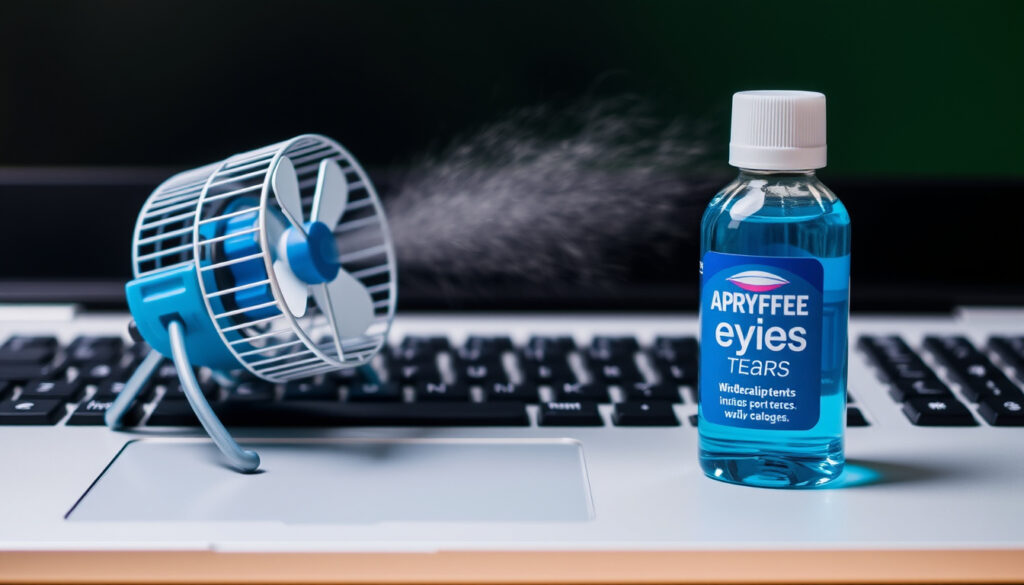
What Causes Dry Eyes? Common Causes & Treatments
If your eyes feel gritty, scratchy, or tired by midday, you’re not alone. Dry eye is one of the most common reasons people visit an eye doctor, yet many don’t know what’s actually causing it — it could be your age, your screen habits, a vitamin deficiency, or even a medication you’re taking.
Age-related risk: Over 50 ·
Screen time risk: Prolonged computer use ·
Contact lens risk: Wearing contact lenses ·
Environmental risk: Air-conditioned or dry climates
Quick snapshot
- Aging (Mayo Clinic (leading US medical center))
- Hormonal changes (Mayo Clinic (leading US medical center))
- Contact lens wear (Mayo Clinic (leading US medical center))
- Screen time (Mayo Clinic (leading US medical center))
- Environmental conditions (AC, wind) (Mayo Clinic (leading US medical center))
- Vitamin A (Mayo Clinic (leading US medical center))
- Omega-3 (Mayo Clinic (leading US medical center))
- Vitamin D (PMC review (peer-reviewed medical literature))
- B12 (National Eye Institute (US government research body))
- Artificial tears (Mayo Clinic (treatment guidance))
- Warm compresses (Mayo Clinic (treatment guidance))
- Prescription eye drops (Mayo Clinic (treatment guidance))
- Lid hygiene (Mayo Clinic (treatment guidance))
- Omega-3 supplements (Mayo Clinic (leading US medical center))
- Vision changes (Mayo Clinic (leading US medical center))
- Severe pain (Mayo Clinic (leading US medical center))
- Persistent redness (Mayo Clinic (leading US medical center))
- Suspected autoimmune disease (Mayo Clinic (leading US medical center))
Four key facts shape how doctors think about dry eye:
| Fact | Details |
|---|---|
| Definition | Dry eye occurs when your eyes do not produce enough tears or when tears evaporate too quickly. (Mayo Clinic (leading US medical center)) |
| Affected population | More common in adults over 50; affects women more often due to hormonal changes. (Mayo Clinic (leading US medical center)) |
| Two main types | Aqueous-deficient dry eye and evaporative dry eye (meibomian gland dysfunction). (National Eye Institute (US government research body)) |
| Common treatments | Artificial tears, warm compresses, prescription drops, environmental adjustments. (Mayo Clinic (treatment guidance)) |
What is the most common cause of dry eyes?
The most common culprit is a breakdown in the tear film — the thin layer of moisture that keeps your eyes smooth and comfortable. This can happen in two ways: your eyes don’t produce enough tears (aqueous-deficient dry eye), or your tears evaporate too quickly (evaporative dry eye). According to Mayo Clinic (leading US medical center), these two mechanisms underlie most cases.
Tear film dysfunction explained
- The tear film has three layers: oil, water, and mucus. If any layer is off, stability suffers.
- Evaporative dry eye — the more common type — often stems from blocked oil glands (meibomian gland dysfunction).
- Aqueous-deficient dry eye results from lacrimal gland issues, often age- or disease-related.
Aqueous-deficient vs. evaporative dry eye
The National Eye Institute (US government research body) explains that aqueous-deficient dry eye is less common but more directly linked to systemic conditions like Sjögren’s syndrome. Evaporative dry eye, by contrast, is driven by environmental factors and lid disease.
If your eyes feel dry by late afternoon after staring at a screen, evaporative dry eye is the likely mechanism — you’re simply not blinking enough to keep the oil glands working.
Age as a primary factor
Age is one of the strongest predictors. Mayo Clinic (leading US medical center) notes that people older than 50 are far more likely to experience dry eyes. Tear production naturally declines with age, and meibomian glands become less efficient.
Bottom line: For patients over 50, age-related tear film changes are the primary driver. For younger adults, screen habits and contact lens wear often take the lead.
Which deficiency can cause dry eyes?
Nutrition plays a bigger role than many realize. Several vitamin and nutrient deficiencies have been linked to dry eye symptoms, and some of the evidence is surprisingly strong.
Vitamin A deficiency
Vitamin A is essential for the health of the ocular surface. Mayo Clinic (leading US medical center) lists a diet low in vitamin A as a confirmed risk factor for dry eyes. Severe deficiency can also cause night blindness and even corneal damage.
Vitamin D deficiency
The link between vitamin D and dry eye has been studied extensively. A PMC review (peer-reviewed medical literature) found that lower serum vitamin D levels correlate with lower tear break-up time, lower Schirmer test values, and tear hyperosmolarity. The same review reports that vitamin D supplementation may improve ocular surface conditions.
Omega-3 fatty acids deficiency
Omega-3s help regulate meibomian gland function. Mayo Clinic (leading US medical center) lists low omega-3 intake as a risk factor, and many eye specialists recommend increasing dietary sources like fish or flaxseed.
B12 deficiency and eye health
The National Eye Institute (US government research body) notes that B12 deficiency can cause dry eye symptoms, though the mechanism is less clear. Some studies suggest B12 supplementation helps improve tear quality.
Bottom line: Vitamin D and omega-3 deficiencies are the most actionable nutritional factors. A simple blood test can identify gaps, and supplementation often provides measurable symptom relief.
How do I stop my dry eyes?
Treatment usually starts with the simplest changes and escalates only if needed. The goal is to restore a stable tear film.
- Use artificial tears as needed. Mayo Clinic (treatment guidance) recommends preservative-free drops if you need them more than four times a day.
- Apply warm compresses daily for 5–10 minutes to unclog oil glands.
- Take regular screen breaks and blink more to reduce tear evaporation.
- Use a humidifier in air-conditioned or heated rooms to maintain moisture.
- Consider prescription drops or omega-3 supplements if steps 1-4 don’t provide sufficient relief.
Lifestyle changes
- Take regular screen breaks — the Mayo Clinic emphasizes that blinking less during computer work increases tear evaporation.
- Use a humidifier in dry or air-conditioned rooms.
- Avoid wind and smoke when possible.
Artificial tears and lubricants
Over-the-counter artificial tears are the first line of defense. Mayo Clinic recommends preservative-free drops if you need them more than four times a day.
Warm compresses for meibomian glands
For evaporative dry eye, warm compresses help unclog oil glands. Mayo Clinic advises applying a warm, damp cloth to closed eyes for 5–10 minutes daily.
Prescription treatments
If basic measures aren’t enough, prescription options include cyclosporine (Restasis) and lifitegrast (Xiidra). These reduce inflammation on the ocular surface. Mayo Clinic notes they can take weeks to show full effect.
When to see a doctor
If your symptoms persist despite self-care, an eye exam is warranted. The HSE Ireland (national health service) advises seeing a GP or optician if dryness lasts more than a few days.
The biggest reason home remedies fail: people skip the warm compress step. For evaporative dry eye, lubricant drops alone can’t fix blocked oil glands.
Bottom line: Patients with mild symptoms: start with artificial tears + screen breaks + warm compresses. Patients with moderate symptoms: add prescription drops and omega-3 supplements. Both groups: if no improvement in 2 weeks, see an eye doctor.
When should you worry about dry eyes?
Most dry eye is a nuisance, but certain symptoms signal something more serious.
Red flags: severe pain, vision changes, redness
Mayo Clinic (leading US medical center) warns that sudden vision changes, severe eye pain, or persistent redness require immediate medical attention. These can indicate corneal damage or infection.
Associated autoimmune conditions
Dry eye can be an early sign of Sjögren’s syndrome, rheumatoid arthritis, or lupus. Mayo Clinic lists these as common associated systemic diseases. If you also have dry mouth or joint pain, an autoimmune workup is wise.
Signs of corneal damage
Chronic severe dry eye can lead to corneal ulcers and scarring. The National Eye Institute (US government research body) states that untreated corneal damage can impair vision permanently.
Bottom line: Any patient with dry eye plus vision change, severe pain, or suspected autoimmune disease should see an ophthalmologist immediately. Otherwise, routine care is safe.
“Dry eye happens when you don’t have enough tears or when your tears evaporate too quickly.”
What causes dry eyes all of a sudden?
Sudden-onset dry eye often catches people off guard. The triggers are usually environmental or medication-related.
Environmental triggers
- Low humidity (air-conditioning, indoor heating)
- Smoke, wind, or air pollution
- Prolonged screen use without breaks
Mayo Clinic confirms that dry air and wind increase tear evaporation, so moving from a humid to a dry environment can cause sudden symptoms.
Medication side effects
Many common drugs list dry eye as a side effect. Mayo Clinic and a PMC review (peer-reviewed medical literature) both identify antihistamines, decongestants, blood pressure medications, antidepressants, and hormone therapy as contributors.
Recent eye surgery (LASIK)
LASIK and other refractive surgeries can reduce corneal nerve sensitivity, leading to temporary dry eye. Mayo Clinic notes this usually resolves within months.
Allergic reactions
Allergies cause inflammation of the ocular surface, which disrupts tear film stability. Mayo Clinic includes allergic eye disease as a trigger.
Bottom line: If your dry eyes came on suddenly, check your environment and recent medication changes. If you started a new drug, ask your doctor about alternatives.
Can dry eyes cause blindness?
Directly? Very rarely. But chronic, severe dry eye can damage the cornea enough to impair vision permanently.
Severe dry eye and corneal damage
The cornea depends on tears for oxygen and protection. The National Eye Institute (US government research body) warns that prolonged dryness can lead to corneal abrasions, ulcers, and scarring.
Infections and scarring
When the corneal surface is compromised, bacteria can enter, causing infection and potential vision loss. Mayo Clinic lists corneal ulcers as a complication of untreated dry eye.
Preventive measures
Early treatment prevents progression. Lubrication, anti-inflammatory drops, and addressing underlying causes keep the cornea healthy.
“Risk factors include being over 50, wearing contact lenses, looking at screens for long periods, and air-conditioned environments.”
Bottom line: Blindness from dry eye is rare but real. Patients with severe symptoms, especially those with autoimmune conditions, must stay on top of treatment to avoid corneal damage.
Confirmed facts and what’s still unclear
Confirmed facts
- Age over 50 is a confirmed risk factor (Mayo Clinic (leading US medical center)).
- Contact lens wear increases risk (Mayo Clinic (leading US medical center)).
- Autoimmune diseases like Sjögren’s syndrome are associated (Mayo Clinic (leading US medical center)).
- Vitamin A deficiency causes dry eye (Mayo Clinic (leading US medical center)).
What’s unclear
- Exact prevalence varies by study and diagnostic criteria.
- Role of specific vitamin D levels is still under investigation (PMC review (peer-reviewed medical literature)).
- Optimal treatment protocol for sudden-onset dry eye is not fully standardized.
- The role of vitamin B12 supplementation in dry eye treatment requires further study.
clarityeyesurgeons.com.au, laeyecare.net, assileye.com, youtube.com, pmc.ncbi.nlm.nih.gov, vcc2020.com
For those seeking relief, exploring the best eye drops for dry eyes can provide targeted moisture and comfort.
Frequently asked questions
Can allergies cause dry eyes?
Yes — allergic inflammation disrupts the tear film. Mayo Clinic (leading US medical center) lists allergic eye disease as a trigger.
Does wearing contact lenses make dry eyes worse?
Yes — contacts can absorb tears and reduce oxygen to the cornea. Mayo Clinic (leading US medical center) identifies lens wear as a risk factor.
Is dry eye a permanent condition?
Not necessarily. Many people manage it effectively with lifestyle changes and treatment. Chronic cases may require ongoing care.
Can dehydration cause dry eyes?
Mild dehydration can reduce tear volume. Staying hydrated helps maintain tear production.
What type of eye drops is best for dry eyes?
Preservative-free artificial tears are recommended for frequent use. For inflammation, prescription drops may be needed. Mayo Clinic (treatment guidance) has specific guidance.
Can dry eyes be a side effect of medication?
Yes. Mayo Clinic (leading US medical center) lists antihistamines, decongestants, antidepressants, and blood pressure meds as common culprits.
Are there home remedies for dry eyes?
Warm compresses, blinking exercises, humidifiers, and omega-3 supplements are effective first steps.
For those managing dry eye at home, choosing the right lubricant is critical. We’ve reviewed the best eye drops for dry eye to help you find relief. And if you’re considering an eye exam, our guide on optician availability may be useful — though services have largely returned to normal in most regions.
Dry eye is a signal from your body that something in the tear film is off. For most people, the fix is straightforward: adjust your environment, change your screen habits, and support your tear glands with warm compresses and nutrition. For the minority with underlying autoimmune or nutritional issues, the stakes are higher — catching it early prevents corneal damage. The choice for patients in Ireland and beyond is clear: take symptoms seriously early, or risk a longer, more uncomfortable road later.
More related posts
 Real Techniques Brush Set Review: Are They Worth It
 A Bronx Tale Cast: Where Are They Now in 2025
 How Long Does Cooked Chicken Last in Fridge: 3-4 Days Guide
 The Ordinary Lash Serum Review: Does It Work? Safety & Results
 Lily O’Brien Chocolates – Buying Guide for Ireland and UK
 Flights from Dublin to London Ryanair: Prices, Timetables & Tips
 What Is a Binder in Cooking? Definition & Examples
 D2 Bus Timetable Laytown to Drogheda: PDF, Fare & Schedule