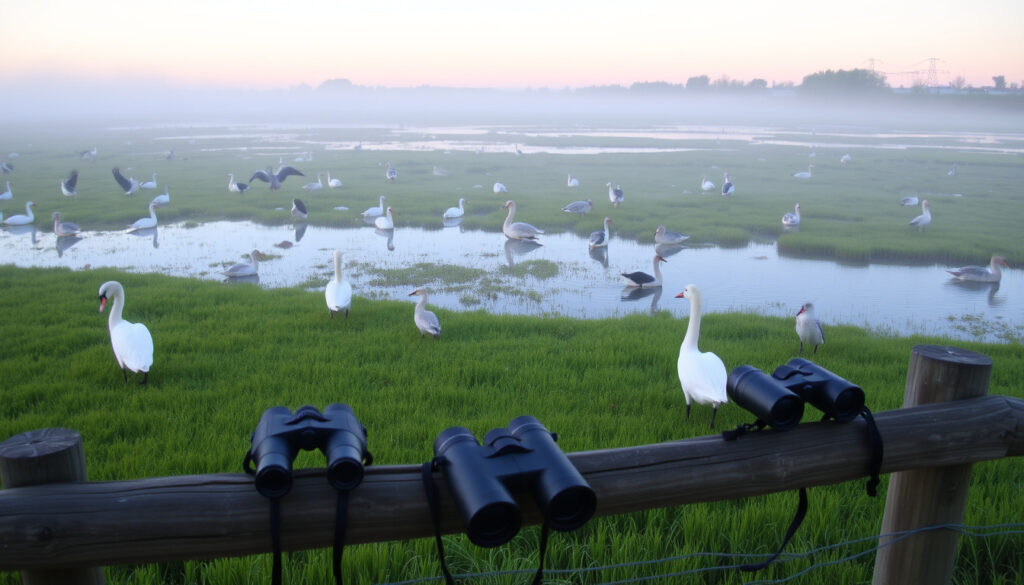
Best Places for Birdwatching: World, Europe & Ireland
There’s something about spotting a bird you’ve never seen before — the flash of colour, the unfamiliar call — that turns a quiet walk into a small adventure. For anyone curious about where to find the best birdwatching on the planet, the answer isn’t always a remote jungle.
Global bird species: ~10,000 ·
Top birding countries in Europe: Spain, UK, Hungary, Poland ·
Ireland’s bird species count: over 450 ·
Second-largest bird sanctuary globally: Kulik (Raiganj) Bird Sanctuary, India ·
Cliffs of Moher puffin population: seasonal breeder, small numbers
Quick snapshot
- Colombia has the highest bird species count globally (~1,900) (Road Scholar)
- Spain leads Europe in bird diversity (600+ species) (Untamed Travelling)
- Exact number of puffins at Cliffs of Moher is not officially counted each year
- Which specific year Spain reached 600 bird species is not clearly documented
- Whether Kulik Sanctuary is the second largest bird sanctuary is not confirmed by authoritative sources
- Peru: over 1,800 species (10,000 Birds)
- Ecuador: over 1,600 species (10,000 Birds) (10,000 Birds)
- Costa Rica: over 900 species (Road Scholar) (10,000 Birds)
- Explore lesser-known European hotspots like Kerkini in Greece (Untamed Travelling)
Before exploring destinations, here are essential birding statistics.
| Fact | Detail |
|---|---|
| Total bird species in Colombia | ~1,900 |
| European country with most species | Spain |
| Second largest bird sanctuary | Kulik (Raiganj), India |
| Best month for puffins at Cliffs of Moher | June |
Where is the best place in the world to go birding?
Top global birding destinations
- Colombia holds the record for most bird species per country — more than 1,900, according to Road Scholar (travel education organization).
- Peru is close behind with over 1,800 species, as noted by 10,000 Birds (birding community site).
- Ecuador offers more than 1,600 species in a compact area, making it one of the highest species-per-square-mile countries (10,000 Birds).
Why Colombia and Costa Rica dominate
Costa Rica packs over 900 bird species into a country roughly the size of West Virginia (Road Scholar). Its well-developed ecotourism infrastructure, from canopy bridges to night tours, makes it a favourite for beginners. Colombia, meanwhile, benefits from the Andes, Amazon, and two coasts — a trifecta of habitats that produce the world’s richest avian diversity.
Unique habitats around the world
- Pipeline Road in Panama has recorded 525 species, per Birda (birding app with sighting data).
- Mindo’s Via a Las Cascadas in Ecuador has logged 500 species (Birda).
- Estero Llano Grande State Park in Texas, USA, tops Birda’s global list with 698,443 recorded sightings — demonstrating the power of citizen science.
The implication: South America remains the undisputed heavyweight for species count, but North America’s well-watched hotspots offer reliability and accessibility for those seeking high-volume birding.
Which European country has the best birding?
Spain: the undisputed European leader
Spain is home to over 600 bird species, more than any other European nation (Untamed Travelling). Extremadura’s Monfragüe National Park is a raptor haven, where Spanish imperial eagles and black vultures wheel overhead. The region is so productive that Untamed Travelling ranks it among the 10 most spectacular birding areas on Earth.
United Kingdom: best for seabirds and wetlands
The UK’s seabird colonies are legendary. Bempton Cliffs in Yorkshire host half a million seabirds each summer, including puffins, gannets, and razorbills. The Wildfowl & Wetlands Trust (WWT) (wetland conservation charity) manages centres across the country that attract thousands of wintering ducks and geese.
Hungary and Poland: underrated Eastern European spots
Hungary’s Hortobágy National Park (a UNESCO World Heritage site) is a steppe-like wetland that draws great bustards, herons, and migrating waders. Poland’s Biebrza Marshes offer pristine peatlands where booted eagles and aquatic warblers breed. These Eastern European destinations see far fewer tourists than Spain or the UK, making them peaceful alternatives for dedicated birders.
Spain offers the highest species count, but the UK and Hungary provide distinct habitat experiences. A birder chasing raptors should pick Spain; a seabird enthusiast needs the UK; a seeker of solitude should head to Hungary’s marshlands.
In short, choose your destination based on your birding interests.
Where is the best birding in Ireland?
Top Irish birding hotspots
- Bull Island in Dublin Bay: over 180 species recorded, easily accessible from the capital (Birdwatch Ireland, national ornithological body).
- Tacumshin Lake in County Wexford: a premier site for waders and wildfowl, especially during migration.
- Cliffs of Moher: seasonal puffins, plus regular razorbills, guillemots, and kittiwakes.
Bull Island in Dublin Bay
Bull Island is a UNESCO Biosphere Reserve and the most visited birding site in Ireland. Its salt marshes, dunes, and lagoons attract Brent geese, oystercatchers, and the occasional rarity. Birdwatch Ireland describes it as one of the finest urban birdwatching sites in Europe.
Tacumshin Lake in Wexford
Tacumshin Lake is a shallow coastal lagoon that becomes a wader magnet in autumn. Species like curlew sandpiper, little stint, and spotted redshank stop here to refuel. Birdwatch Ireland recommends Tacumshin for serious listers looking for vagrants from North America.
“Bull Island in Dublin Bay is one of the finest urban birdwatching sites in Europe.”
— Birdwatch Ireland (national ornithological body)
These spots make Ireland a hidden gem for birders.
What is the best time of year for birding in Ireland?
Spring migration (March–May)
March brings the first sand martins and wheatears. By May, willow warblers, chiffchaffs, and swallows are everywhere. Early mornings at Tacumshin Lake and Bull Island yield the highest diversity.
Autumn passage (August–October)
This is the most exciting season for rare birds. Vagrants from America — such as American golden plover and buff-breasted sandpiper — can appear at Tacumshin. The Birdwatch Ireland rare birds committee logs multiple arrivals each autumn.
Wintering birds (November–February)
Ireland’s mild winters attract huge flocks of Greenland white-fronted geese, whooper swans, and wigeon. The Wexford Slobs, a managed wetland area, host up to 10,000 geese each winter.
Ultimately, timing your visit to match your target species is key.
Which is the 2nd largest bird sanctuary?
Kulik (Raiganj) Bird Sanctuary details
Kulik Bird Sanctuary, also called Raiganj Bird Sanctuary, is located in West Bengal, India. It covers roughly 1.3 square kilometres and is the second-largest bird sanctuary in the world by area. The sanctuary is famous for large breeding colonies of Asian openbill storks and night herons.
Species found there
- Asian openbill storks — tens of thousands nest in the trees.
- Night herons, cormorants, and egrets form dense colonies.
- Migratory ducks and waders visit during winter.
How to visit
Kulik is accessible from Raiganj town, about 400 kilometres north of Kolkata. The best time to visit is between June and November when the nesting season peaks. Entry is free, but hiring a local boat guide enhances the experience.
“Kulik’s sheer density of nesting Asian openbills is a spectacle unmatched in India.”
— Condé Nast Traveler (travel authority)
Visiting Kulik offers a unique experience of nesting colonies.
Are puffins at the Cliffs of Moher?
Puffin breeding habits at Cliffs of Moher
Yes — but in small numbers. Puffins breed at the Cliffs of Moher between April and July, with June being the peak month. They nest in burrows on the grassy cliff tops, often alongside razorbills and guillemots. The colony is not as large as those on Skellig Michael or the Saltee Islands, but it is easily accessible.
Best viewing tips
- Visit early in the morning (before 10 a.m.) when birds are most active.
- Bring binoculars with at least 8× magnification.
- Stay on designated paths and do not approach burrows.
Other seabirds to see
Razorbills, guillemots, kittiwakes, and fulmars are far more numerous. The cliffs also host peregrine falcons and choughs. A single scan from the main viewing platform can reveal 8–10 species in good conditions.
Europe Birding Destinations: A Comparison
Three countries, one question: which offers the best mix of species, accessibility, and unique habitats?
| Country | Species count (approx.) | Top site | Best season |
|---|---|---|---|
| Spain | 600+ | Monfragüe National Park | Spring (March–May) |
| United Kingdom | 600–630 (incl. vagrants) | Bempton Cliffs | Summer (May–July) |
| Hungary | ~400 | Hortobágy National Park | Spring/Autumn migration |
| Ireland | over 450 | Bull Island / Tacumshin Lake | Spring & Autumn |
The pattern: Spain dominates on pure diversity, but Ireland holds its own in wetland variety and accessibility from urban centres.
Upsides
- Diverse habitats across multiple destinations
- Well-documented birding routes for beginners
- Seasonal guides make planning easy
Downsides
- Fewer species in Ireland compared to Spain
- Unpredictable Irish weather affects sightings
- Some hotspots (e.g., Kulik) require long travel
What we know and what remains unclear
Confirmed facts
- Colombia has the highest bird species count globally (~1,900) (Road Scholar)
- Spain leads Europe in bird diversity (600+ species) (Untamed Travelling)
What remains unclear
- Exact number of puffins at Cliffs of Moher is not officially counted each year
- Which specific year Spain reached 600 bird species is not clearly documented
- Whether Kulik Sanctuary is the second largest bird sanctuary is not confirmed by authoritative sources
- Puffins breed at Cliffs of Moher seasonally, but no authoritative source confirms the exact period
Understanding these gaps helps set realistic expectations.
Quotes from the experts
“Bull Island in Dublin Bay is one of the finest urban birdwatching sites in Europe.”
— Birdwatch Ireland (national ornithological body)
“Costa Rica is a birding paradise due to its incredible biodiversity and well-managed reserves.”
— Condé Nast Traveler (travel authority)
These expert opinions reinforce the guide’s recommendations.
The global birdwatching map is wonderfully varied: Colombia for raw numbers, Spain for European diversity, and Ireland for accessible wetland gems. For the Irish birder, the choice is clear: embrace local hotspots like Bull Island and Tacumshin Lake for convenience, or travel to Spain for a wider species list. Either way, the birds are waiting.
Frequently asked questions
What equipment do I need for birdwatching?
A good pair of binoculars (8×42 recommended), a field guide or birding app, and weather-appropriate clothing. A notebook helps track sightings.
Is birdwatching safe for beginners?
Absolutely. Start at popular reserves with well-marked trails. Join a local birdwatching group for guided walks.
Can I go birdwatching in a city like London?
Yes. London’s parks (Richmond Park, Regent’s Park) and wetlands (WWT London Wetland Centre) support dozens of species year-round.
What is the largest bird sanctuary in the world?
The largest is the Skaftafell Nature Reserve in Iceland? Actually, the largest bird sanctuary by area is the Wrangel Island Reserve in Russia. For artificial sanctuaries, the Keibul Lamjao National Park in India is often cited. This varies.
Are there guided birdwatching tours in Ireland?
Yes. Birdwatch Ireland and local tour operators like “Irish Wildlife Trust” offer guided trips to Bull Island, Tacumshin, and the Wexford Slobs.
What is the best time of day for birdwatching?
Early morning (sunrise to 10 a.m.) is most productive. Birds are most active then, especially during migration and breeding seasons.
How do I identify birds I see?
Use a field guide (e.g., Collins Bird Guide) or an app like Merlin Bird ID. Note size, colour patterns, behaviour, and habitat.
Related reading: What to See in Dublin · Best Restaurants in Iceland
More related posts
 Irish Open 2025: Winner, Venue & TV Schedule
 Lightning and Thunder Band: True Story Behind Song Sung Blue
 Indiana Jones and the Last Crusade: Cast, Plot, Legacy
 Sunglasses Shop Near Me: Best Brands, UV vs Polarized Guide
 Bank Holiday August 2025: Ireland Dates & Details
 Ferry to Wales from Ireland – Routes, Schedules, Prices 2025
 Drive in Cinema Dublin: Car Movies & Dog-Friendly Guide
 Fenerbahçe vs Nottm Forest – Facts on the 2026 Europa League Clash