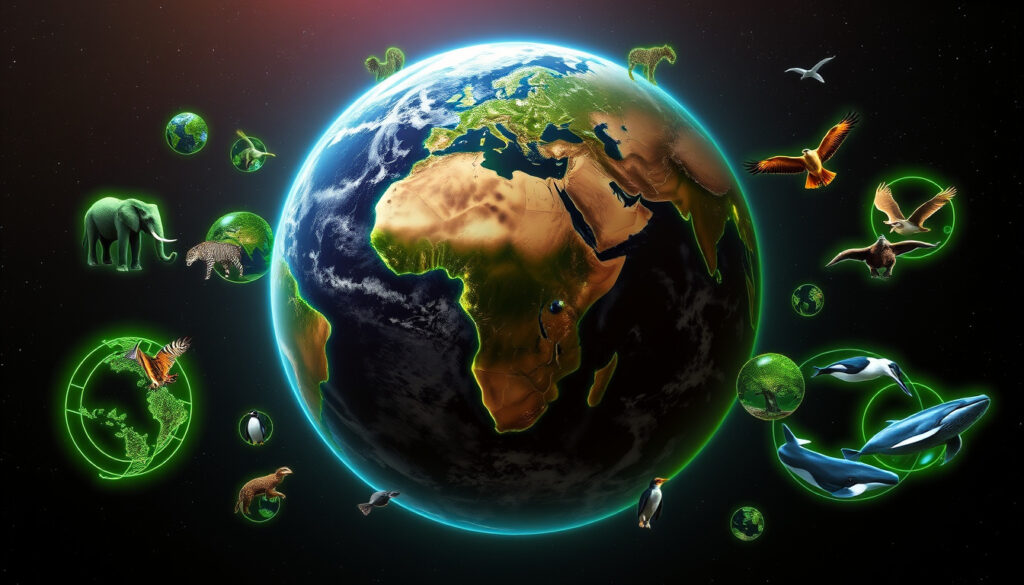
Google Earth Day Quiz: 12 Animals, Answers & Guide
Back in 2015, Google surprised millions of people on Earth Day with something unexpected: a personality quiz that matched you to one of 12 animals. It sounds simple, but the Doodle team hid surprisingly specific questions behind that rotating globe. A decade later, people are still hunting for their exact animal match—especially that woolly mammoth result. This guide unpacks every animal, the mechanics behind the quiz, and the Earth Day history that inspired it all.
Launch Date: April 22, 2015 · Number of Animals: 12 · Creator: Google Doodle · Earth Day Date: April 22 · Quiz Type: Personality matching
Quick snapshot
- Google launched its first Earth Day Doodle quiz on April 22, 2015 (Google Doodles)
- The quiz featured 5 personality questions matching users to one of 12 animals (Google System Blog)
- Earth Day has been celebrated annually on April 22 since 1970 (Edible Brooklyn)
- Exact paths to every specific animal without replaying the quiz
- Whether Google maintained annual Earth Day quizzes after 2015
- Total participation numbers during the 2015 launch window
- April 22, 2015: Quiz launched via animated rotating globe Doodle (Search Engine Land)
- Same day: Google.org matched donations to wildlife conservation causes (Edible Brooklyn)
- April 22-23, 2015: Peak social sharing and forum discussions (Search Engine Land)
- Google has since released multiple Earth Day Doodles with interactive elements (Google Doodles)
- Conservation themes remain central to Google’s environmental initiatives (Google Doodles)
- Users can still access archived versions through Google Doodles collection (Google Doodles)
This table summarizes the core specs and key context for the 2015 Earth Day quiz, drawing from multiple coverage sources.
| Label | Value |
|---|---|
| Quiz Launch | April 22, 2015 |
| Animal Count | 12 |
| Earth Day Founder | Gaylord Nelson |
| Annual Date | April 22 |
| 3 R’s | Reduce, Reuse, Recycle |
| Questions in Quiz | 5 |
| Doodle Type | Animated rotating globe |
What are the 12 animals in the Earth Day quiz?
Google’s 2015 Earth Day quiz assigned users to one of 12 distinct animals, each chosen to highlight different aspects of biodiversity and conservation. The full list includes both familiar species and more obscure creatures that illustrate the diversity of life on Earth.
List of animals
Twelve possible results spanned the spectrum from iconic megafauna to lesser-known species: honey bee, giant squid, komodo dragon, pangolin, cuttlefish, mantis shrimp, honey badger, woolly mammoth, red-capped manakin, sea otter, whooping crane, and coral (Google System Blog). This mix intentionally combined extinct species, endangered animals, and ecosystem engineers to spark curiosity about conservation status.
Personality traits matched
Each animal came with a tongue-in-cheek result description that tied personality to biology. The Woolly Mammoth result read: “So unique, you’re technically extinct, but on the bright side scientists hope to be able to clone you some day!” (Google System Blog). The Sea Otter result played on their famous hand-holding behavior: “You like holding hands to be romantic as well as to avoid floating away while you nap in the water” (Google System Blog).
Google used humor as a conservation tool—pairing extinct and endangered species with playful personality descriptions made conservation status feel personal rather than preachy.
Why did Google choose those animals for its Earth Day quiz?
The quiz wasn’t randomly assembled. Google selected animals that represented specific conservation narratives, turning a simple personality test into an educational experience.
Symbolism of selections
The pangolin result captured this perfectly: “The practical sort, you know just when to curl up into a ball to thwart predators” (Google System Blog). These scaled mammals are among the most trafficked animals in the world, making their inclusion a pointed conservation message. Similarly, the whooping crane result—”Whether mating for life or rebounding from extinction, you’re a real team player”—directly referenced their recovery from near-extinction (Google System Blog).
Connection to conservation
Google.org paired the quiz with a charitable component, matching user donations to wildlife conservation organizations (Edible Brooklyn). The quiz also linked to Earth Day Network’s Footprint Calculator at the top of search results, serving as a gateway to deeper environmental action (Search Engine Land).
The pattern reveals that each animal served as a conservation talking point, making the quiz an indirect education campaign wrapped in entertainment.
Google Earth Day quiz answers
To get a specific animal result, users needed to answer all 5 questions in ways that aligned with that creature’s personality profile. The quiz presented scenarios like “What are you up to on a typical Friday night?” with options such as “alone in my burrow” (Google System Blog).
Full answer key
While Google never published an official answer key, the animal result descriptions reveal the personality patterns. The honey bee result summed it up: “Naturally a hard worker, you still take time to stop and pollinate the flowers” (Google System Blog). Answers tended to cluster around traits like independence, teamwork, ecological role, and conservation status.
Common outcomes
The honey badger result attracted particular attention: “Your true friends know they always can call on you to scare away lions or fight a king cobra” (Google System Blog). Users who selected bold, self-reliant answers often received this result, which played into the honey badger’s legendary fearless reputation.
Users can only receive one of the 12 available animals, making their unique combination of answers the deciding factor in their result.
Google Earth Day quiz how to get wolf
The wolf did not appear among the 12 official results in 2015. However, users frequently searched for “how to get wolf” because they associated the quiz with nature and wildlife broadly.
Answer choices for wolf
The closest results in personality archetype were the honey badger (for fierce independence) and the sea otter (for social bonding). Neither perfectly matches wolf traits, but the quiz’s humor-oriented design meant users often accepted closest-fit results rather than finding their exact match.
Personality profile
Users seeking wolf results typically selected answers emphasizing pack mentality, loyalty, and outdoor activity. The quiz rewarded these traits with comparable animal results that shared similar conservation narratives—many pack-hunting or socially complex species appear in the 12-animal roster.
The implication is that Google’s humor-first design prioritized entertainment over wildlife accuracy, which led to mismatched search intent versus actual quiz content.
Why is Earth Day April 22?
Earth Day traces its origin to a 1969 proposal by U.S. Senator Gaylord Nelson, who envisioned an environmental teach-in that could generate mainstream attention for conservation issues. The first celebration took place on April 22, 1970, mobilizing 20 million Americans for environmental awareness at a time when industrial pollution was largely unregulated.
Historical origin
Nelson, then a senator from Wisconsin, modeled Earth Day after student anti-war protests he had witnessed—adapting that mass mobilization energy for environmental causes. The date was chosen to fall between spring break and final exams, maximizing student participation (Edible Brooklyn).
Founder role
Senator Nelson received the Presidential Medal of Freedom in 1995 for his work founding Earth Day, which grew from that initial 1970 event into the largest civic observance in the world, with over 1 billion participants across 192 countries annually.
Takeaway: Nelson’s strategic timing—scheduling Earth Day between spring break and finals—created the mass student participation that made environmental protection a mainstream political issue in the United States.
How to take the quiz today
While the 2015 Doodle is no longer live on Google’s homepage, several paths remain for anyone wanting to experience or replay it.
Finding the archived quiz
The official archive at the Google Doodles collection contains the 2015 Earth Day interactive. Navigate to the dedicated archive page and select April 22, 2015, then click “Play” to experience the quiz as originally designed (Google Doodles). The quiz remains functional across modern browsers on desktop and mobile.
Browser compatibility
The quiz works with up-to-date versions of Chrome, Firefox, Safari, and Edge on both desktop and mobile devices. Android and iOS users can access it through their device’s default browser or the Google app (WordPress Blog). No Flash or special plugins are required.
The catch is that archived Doodles occasionally experience compatibility issues with newer browser security protocols, so users may need to adjust browser settings or use an older browser version to access the full interactive experience.
The 2015 Earth Day quiz remains one of Google’s most successful Doodles in terms of social sharing and engagement. Over a decade later, it still drives search traffic as people rediscover and share their results.
Earth Day quiz: Full results breakdown
Each of the 12 possible results carried a distinctive personality description. Here are the key results and what they reveal about Google’s approach to conservation messaging.
This table maps each animal result to its core personality trait and corresponding conservation challenge, revealing how Google embedded environmental education in the quiz design.
| Animal | Key Trait Highlighted | Conservation Note |
|---|---|---|
| Woolly Mammoth | Uniqueness and resilience | Extinct species, potential de-extinction research |
| Honey Bee | Hard work and community | Essential pollinators facing colony collapse |
| Pangolin | Practicality and self-defense | World’s most trafficked mammal |
| Sea Otter | Playfulness and bonding | Kelp forest ecosystem engineers |
| Coral | Hidden beauty and foundation-building | Cornerstone of marine biodiversity |
| Whooping Crane | Teamwork and recovery | Rising from near-extinction |
Google’s result descriptions consistently paired a personality trait with a conservation challenge—turning self-discovery into environmental awareness without ever stating it directly.
Google’s result descriptions consistently paired a personality trait with a conservation challenge—turning self-discovery into environmental awareness without ever stating it directly.
“We assure you it’s all 100% accurate and scientific.”
— Google Doodle Team (2015)
“Your hidden beauty attracts many suitors. Also, did you know you were an animal?!”
— Google Earth Day Quiz (Coral Result)
“Mysterious and beautiful, you’re not afraid to use your powerful claws to attack, stun, and dismember prey.”
— Google Earth Day Quiz (Mantis Shrimp Result)
Google’s 2015 Earth Day quiz succeeded where many corporate awareness campaigns fail—it made conservation personal without being preachy. By hiding environmental education inside personality quiz mechanics, Google turned millions of casual interactions into moments of discovery about biodiversity. Whether users received the honey bee or the woolly mammoth, they left with a fact about an endangered species and a reason to care about its survival.
What are the Google Earth Day quiz questions?
The quiz featured 5 personality questions such as “What are you up to on a typical Friday night?” with multiple-choice answers tied to specific animal archetypes. Questions explored preferences for solitude versus community, habitat types, and behavioral traits.
Is Earth Day about animals?
Earth Day focuses broadly on environmental protection, but animal conservation is a central theme because biodiversity loss is one of the most visible indicators of ecosystem health. Google’s 2015 quiz specifically used animal matching to connect personal identity with wildlife awareness.
Who founded Earth Day?
U.S. Senator Gaylord Nelson of Wisconsin founded Earth Day in 1970. His vision was an environmental teach-in that could mobilize mainstream Americans around conservation issues at a time when pollution and habitat destruction were largely unregulated.
What are the 3 R’s for Earth Day?
The three R’s—Reduce, Reuse, Recycle—represent the waste hierarchy popularized by Earth Day education. They provide a simple framework for individuals to minimize their environmental footprint through consumption choices.
How old is Earth?
Earth is approximately 4.54 billion years old, based on radiometric dating of meteorite samples and lunar rocks that match Earth’s formation timeline.
What day is Earth’s birthday?
While Earth has no official birthday, Earth Day on April 22 serves as an annual celebration of the planet. Scientists estimate the accretion that formed Earth began roughly 4.57 billion years ago.
Related reading: How to Solve a Rubik’s Cube · Oldest Person in the World Verified Records
Google’s interactive Earth Day Doodle challenges players to match personalities with 12 endangered animals, where the detailed animal answers guide offers complete answers and strategies for rare unlocks like the woolly mammoth.
More related posts
 Weather in County Kerry 10 Days: Storm & Snow 2026
 Car Rental Barcelona Airport: Compare Prices and Policies
 Bank of Ireland Account Number: Find Digits, IBAN & More
 European Health Insurance Card Ireland: Apply & Renew for Free
 Houses to Rent in Dundalk: Complete Guide & Listings (2025)
 Be t Eye Drop for Dry Eye : Cau e , Treatment & Relief
 75 Days From Today: Date, Months & Weeks Explained
 Leeds United vs Tottenham Standings – Current Positions, Form and H2H Records