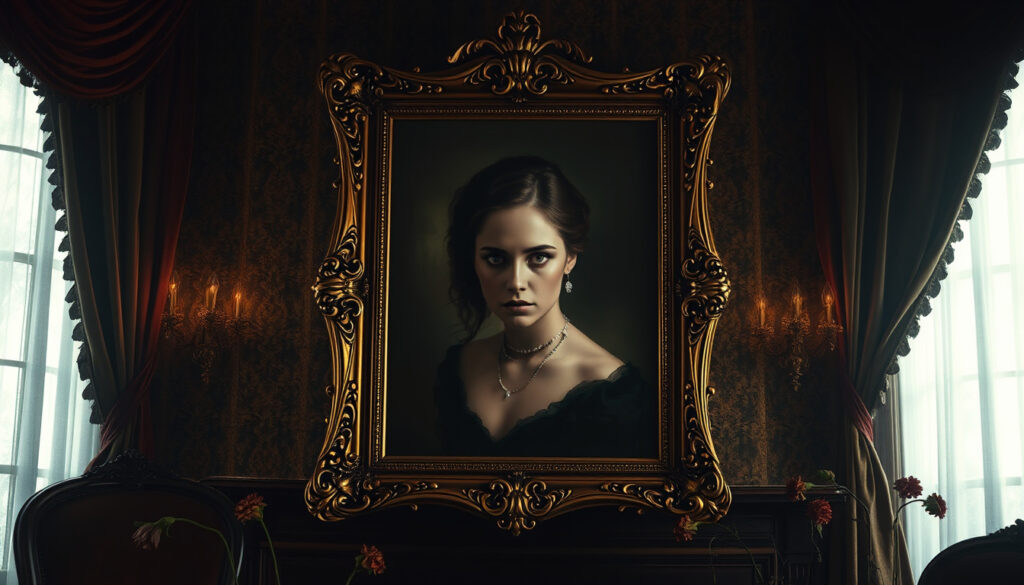
The Picture of Dorian Gray – Summary Themes and Analysis
Oscar Wilde’s only novel remains one of Victorian literature’s most provocative and enduring works. First appearing in Lippincott’s Monthly Magazine in July 1890 before expanding into book form the following year, The Picture of Dorian Gray weaves together Gothic atmosphere with philosophical exploration of beauty, morality, and the soul. The novel follows a handsome young man who makes a fateful wish: that his portrait would age and bear the marks of his sins while he remains eternally youthful.
The story unfolds through the intertwined fates of Dorian Gray, the artist Basil Hallward, and the cynical aristocrat Lord Henry Wotton. What begins as a meditation on aestheticism gradually transforms into a dark meditation on corruption, guilt, and the impossibility of escaping one’s true nature. More than a century after its publication, the novel continues to provoke discussion about the relationship between appearance and reality, the dangers of unchecked hedonism, and art’s capacity to reveal uncomfortable truths.
What is The Picture of Dorian Gray About?
The narrative centers on artist Basil Hallward, who becomes captivated by the extraordinary beauty of Dorian Gray, a young aristocratic man visiting his London studio. It is during one of these sessions that Basil encounters Lord Henry Wotton, a wealthy and disillusioned aristocrat whose nihilistic philosophy about pleasure and sensation profoundly influences Dorian’s worldview.
Oscar Wilde
Gothic Philosophical Fiction
1890 (Magazine), 1891 (Book)
Youth preserved through supernatural portrait
The Fateful Wish and Its Consequences
Lord Henry’s influence sparks within Dorian an obsession with preserving his youth and beauty at any cost. During a conversation about the fleeting nature of youth, Dorian makes a wish that will define the remainder of his existence: that he could remain unchanged while his portrait ages and bears the burden of his sins. The wish is granted through supernatural means, setting in motion a chain of events that will lead to tragedy and moral destruction.
Dorian soon falls deeply in love with Sibyl Vane, a talented actress he encounters backstage at a theater. He proposes marriage, seeing in her pure devotion an escape from the corruption he senses creeping into his own soul. However, when Sibyl’s love for Dorian makes her unable to perform convincingly on stage, he cruelly rejects her. That night, the portrait’s expression shifts, developing a cruel sneer that confirms the supernatural bargain is real. The devastated Sibyl takes her own life, and Dorian remains unmoved, focused only on his preserved youth.
The Descent into Corruption
Over the following eighteen years, Dorian indulges in every conceivable vice and pleasure, his face remaining as fresh and beautiful as the day the portrait was painted. He hides the increasingly grotesque painting in an attic room, where it accumulates the visible marks of his moral decay. The face in the portrait becomes a “dark mirror” reflecting the true state of his soul, while his physical appearance remains untouched by either age or consequence.
Key Insights Into the Novel
- The portrait serves as both supernatural artifact and symbolic conscience for Dorian
- Lord Henry’s philosophy of “new Hedonism” represents a genuine Victorian-era philosophical challenge to conventional morality
- Sibyl Vane’s tragic fate demonstrates the novel’s view that love cannot survive Dorian’s fundamental selfishness
- The novel’s ending inverts the Faustian bargain, punishing Dorian for trying to escape accountability
- Wilde uses the double life of appearance versus reality to critique Victorian society’s emphasis on surface respectability
- The “yellow book” that corrupts Dorian represents Wilde’s critique of French Decadent literature
| Fact | Details |
|---|---|
| Original Magazine Publication | Lippincott’s Monthly Magazine, July 1890 |
| Book Publication | 1891, Ward, Lock, and Co. |
| Approximate Length | 80,000 words |
| Number of Chapters | 20 (original magazine had 14) |
| Wilde’s Only Novel | Yes |
| Censorship History | Portions censored for “gross indecency” |
The novel’s initial publication in Lippincott’s Monthly Magazine included censored passages, particularly those suggesting homoerotic undertones between Dorian and Basil. The expanded 1891 edition restored these passages and added six additional chapters, including a moral preface where Wilde famously declared that “there is no such thing as a moral or an immoral book.”
Who Wrote The Picture of Dorian Gray and When Was It Published?
Oscar Wilde, the Irish playwright and author who would later face criminal prosecution for his relationships with men, wrote The Picture of Dorian Gray during a period of intense creative activity. Born in Dublin in 1854, Wilde had already established his reputation through his brilliant wit, lectures on aesthetics, and successful plays including Lady Windermere’s Fan when he composed this novel.
The Publication Timeline
The novel’s journey to publication reflects the cultural tensions of its era. The initial magazine version appeared in Lippincott’s Monthly Magazine in July 1890, where it was notably edited for content considered morally objectionable at the time. Wilde then substantially expanded the work for its book publication in 1891, adding six chapters that deepened the philosophical arguments and restored material that had been cut.
The book edition also included Wilde’s controversial preface, a defense of aestheticism that challenged conventional Victorian morality. In it, Wilde argued that books are either well-written or badly written, never moral or immoral, and that the artist’s life is as important as his art. These statements would haunt Wilde during his later trials, as his accusers cited the novel as evidence of his moral corruption.
Scandal and Reception
From its first appearance, The Picture of Dorian Gray provoked controversy. The novel’s frank treatment of homosexuality, its critique of Victorian hypocrisy, and its beautiful prose describing corrupt pleasures unsettled many readers. Reviewers struggled with how to categorize the work—was it a cautionary tale or an aesthetic celebration of sin? Wilde’s own behavior, increasingly flamboyant in the years following publication, only intensified these questions.
The novel’s publication preceded Wilde’s infamous trials by five years. During those trials in 1895, his association with The Picture of Dorian Gray and its themes was cited against him, contributing to his conviction for gross indecency. Scholars note that the novel’s protagonist bears certain parallels to real figures in Wilde’s circle, though Wilde always denied any specific inspiration.
What Are the Main Themes and Symbolism?
The Picture of Dorian Gray operates on multiple levels, blending Gothic conventions with philosophical inquiry about the nature of beauty, morality, and the soul. The novel’s enduring power derives partly from Wilde’s ability to weave these elements into a narrative that remains genuinely suspenseful while making profound statements about human nature.
The Portrait as Symbol
The portrait stands as the novel’s central symbol, representing multiple concepts simultaneously. It functions as both a supernatural object and a psychological metaphor for conscience. As scholars have noted, the portrait serves as a “dark mirror” reflecting Dorian’s true moral condition while his physical appearance remains beautiful and unchanging. This dualism allows Wilde to explore the gap between outward appearance and inner reality that fascinated him throughout his career.
The painting also represents the soul’s capacity for both beauty and corruption. Unlike traditional morality tales where outward beauty reflects inner virtue, Wilde inverts this relationship. Dorian’s physical beauty increases precisely as his moral corruption deepens, suggesting that society’s obsession with surface appearance blinds it to true moral reality.
Hedonism Versus Morality
Lord Henry Wotton’s philosophy of “new Hedonism” presents the novel’s most direct challenge to conventional morality. His argument that experience is the only good, that sensation and pleasure constitute the highest purpose of life, genuinely seduces Dorian and, Wilde implies, many readers as well. The novel does not entirely dismiss these ideas; instead, it shows their ultimate bankruptcy through the consequences they produce.
The corruption that overtakes Dorian is not sudden but gradual, each pleasure leading to another more dangerous one. This progression reflects Wilde’s understanding that moral degradation rarely happens through single dramatic choices but through the slow accumulation of small compromises. By the time Dorian fully grasps what he has become, redemption has become impossible.
Appearance and Reality
Victorian society prized respectability and surface appearances above almost all else. Wilde uses Dorian’s dual existence to expose the hypocrisy at the heart of this worldview. While society praises Dorian’s youthful beauty and supposed virtue, his portrait reveals the monstrous truth of his life. The gap between these two realities becomes increasingly absurd, with Dorian attending the most respectable gatherings while hiding a room full of horrors.
Some readers interpret the novel as endorsing Dorian’s philosophy, while others see it as a clear moral warning. Scholars generally agree that the ending—with Dorian destroyed while his portrait is restored—indicates Wilde’s ultimately conservative moral message, even if the journey to that conclusion explores dangerous ideas with evident appreciation.
Who Are the Key Characters?
The novel’s relatively small cast of characters allows Wilde to develop each figure with considerable depth, creating archetypes that continue to resonate in literature and culture. Each character represents a different relationship to beauty, morality, and time, making their interactions charged with symbolic significance.
Dorian Gray
The eponymous protagonist begins as a figure of almost supernatural beauty and innocence. His encounter with Lord Henry transforms him from an unthinking vessel of aesthetic perfection into a calculating hedonist. Over the novel’s eighteen-year span, Dorian becomes increasingly monstrous while retaining his youthful exterior, a walking contradiction that embodies Wilde’s critique of Victorian society’s surface morality.
Basil Hallward
Basil represents artistic idealism and genuine love uncorrupted by selfish desire. His portrait of Dorian captures something essential about the young man’s beauty that Lord Henry immediately recognizes as dangerous. Basil’s genuine attachment to Dorian makes his murder particularly significant; it represents the destruction of innocence and authentic artistry by the corruption Dorian has embraced.
Lord Henry Wotton
Lord Henry functions as both temptation and intellectual antagonist. His witty aphorisms and nihilistic philosophy make him seductive to Dorian, and by extension, to the reader. Yet Lord Henry himself remains unchanged by his ideas; he speaks of experience but participates in none of it, making him a hollow figure whose influence is more corrosive than his own life.
Sibyl Vane and Supporting Characters
Sibyl Vane represents pure theatrical art and genuine emotional depth, qualities that initially attract Dorian and eventually lead to her destruction. Her suicide following his rejection demonstrates the fatal incompatibility between Dorian’s selfishness and authentic human connection. Other figures like James Vane, Sibyl’s vengeful brother, and Alan Campbell, the chemist whom Dorian blackmails, serve to remind Dorian of the consequences of his actions while emphasizing his isolation.
Film Adaptations and Is It Based on a True Story?
The Picture of Dorian Gray is a work of fiction with no documented basis in actual events. Oscar Wilde did not claim any specific inspiration for the supernatural premise, though scholars have noted similarities to folklore traditions about portraits that reveal truth and folk beliefs about reflections containing souls. The novel’s themes of eternal youth particularly resonated with late-Victorian anxieties about aging and the body’s vulnerability to time. For those interested in the song Beautiful Things, you can find more information at Benson Boone Beautiful Things.
Notable Film Adaptations
The novel has inspired numerous screen interpretations since the early days of cinema. The 1945 film adaptation starring Hurd Hatfield as Dorian became a classic of the Gothic horror genre, establishing visual conventions that many subsequent versions followed. The 2009 adaptation with Ben Barnes brought the story into the modern era, emphasizing what contemporary audiences perceive as homoerotic undertones between Dorian and Basil.
Beyond feature films, the novel has been adapted for the stage, opera, and television. Productions routinely emphasize different aspects of the text, sometimes focusing on the Gothic horror elements, other times on the philosophical debates or the romantic relationships. The novel’s adaptability speaks to its rich symbolism and the timeless appeal of its central premise.
Contemporary adaptations often foreground themes of vanity, social media obsession with appearance, and the performance of identity that Wilde only implied. These readings find new resonance in an age when image manipulation and carefully curated public personas have become ubiquitous, making Dorian’s obsession with preserving his appearance relatable in unexpected ways.
Publication and Reception Timeline
Understanding the historical context of The Picture of Dorian Gray requires examining both Wilde’s personal circumstances and the broader cultural climate of its publication. The novel’s evolution from magazine serial to book form reflects the tensions between Victorian propriety and aesthetic radicalism that defined Wilde’s career.
-
Scholars estimate Wilde began developing ideas that would become The Picture of Dorian Gray during this period -
Initial serialization in Lippincott’s Monthly Magazine with censored passages -
Expanded book edition published with six additional chapters and Wilde’s controversial preface -
Wilde’s trials for gross indecency; The Picture of Dorian Gray cited as evidence against him -
Classic film adaptation starring Hurd Hatfield establishes visual archetype for future versions
Understanding Fact and Fiction in the Novel
Readers sometimes wonder about the relationship between Oscar Wilde’s life and his fiction, particularly regarding The Picture of Dorian Gray. While certain parallels exist between Wilde’s experiences and Dorian’s fate, the novel remains a work of imaginative literature rather than autobiography.
Established Facts
- The novel is entirely fictional with no documented true story basis
- Wilde denied specific inspirations for the supernatural premise
- The novel was influenced by Faustian bargain traditions in literature
- Wilde faced prosecution partly due to associations with this novel’s themes
- The portrait functions as symbolic rather than literal supernatural object
Common Misconceptions
- Dorian Gray was not based on a specific historical figure
- The supernatural aging of the portrait should be read symbolically
- Wilde’s sexuality did not “corrupt” the novel; he was already an established author
- The novel’s homoerotic elements, while present, were not the author’s admitted focus
The Victorian Gothic Tradition
Wilde’s novel belongs to the tradition of Victorian Gothic fiction, which combined supernatural horror with social critique. Works like Robert Louis Stevenson’s Strange Case of Dr Jekyll and Mr Hyde and Bram Stoker’s Dracula explored similar themes of hidden corruption beneath respectable surfaces. However, Wilde brought a distinctive aesthetic sensibility to these conventions, making the Gothic horrors seductive rather than merely frightening.
The novel’s engagement with the Gothic extends to its atmospheric settings—the hidden attic room where Dorian conceals his portrait, the opium dens that suggest a hidden world of vice beneath London streets, and the isolated country house where the final confrontation occurs. These spaces create the conditions for Dorian’s corruption while providing visual symbols for the hidden aspects of self that Victorian society insisted did not exist.
Notable Quotes and Critical Perspectives
“The only way to get rid of a temptation is to yield to it.”
— Lord Henry Wotton, The Picture of Dorian Gray
“There is no such thing as a moral or an immoral book. Books are well written, or badly written.”
— Oscar Wilde, Preface to The Picture of Dorian Gray
“I am inclined to think that I was right about the portrait. The soul is the real paradise.”
— Basil Hallward, The Picture of Dorian Gray
Why Does Dorian Stab the Portrait?
Dorian’s decision to destroy the portrait represents the culmination of his failed attempt at reform. After eighteen years of corruption, Dorian attempts to become genuinely virtuous by sparing Hetty Merton, a young woman he considers saving from a similar fate. Yet this self-serving “goodness” produces the opposite effect—the portrait becomes even more hideous, as if mocking his hypocrisy. In that moment of despair, Dorian concludes that if he destroys the portrait, he will be free of the visible evidence of his sins forever. He stabs the painting, but the action reverses rather than fulfills his wish. The withered, aged body that servants discover reveals that the true Dorian was always the portrait, and his physical appearance was the illusion all along.
The novel’s conclusion affirms the primacy of the soul over the body, suggesting that attempts to escape moral accountability through external manipulation ultimately fail. Dorian’s physical beauty was never who he truly was; it was merely the mask that deceived the world. For readers exploring related works of Irish literature and fantasy, examining Stranger Things Season 5 – Release Dates Cast Plot Guide demonstrates how modern storytelling continues to grapple with similar themes of hidden identity and supernatural consequence.
Frequently Asked Questions
What happens at the end of The Picture of Dorian Gray?
Dorian stabs the portrait in an attempt to destroy the visible evidence of his corruption. Instead, he dies aged and withered, while the portrait returns to its original beautiful state. This reversal of his wish confirms that the portrait was always his true self, and his physical appearance was merely an illusion.
Why did Dorian Gray stab the picture?
After attempting a self-serving “reform” that paradoxically made the portrait even uglier, Dorian concluded that destroying the portrait would free him from its judgment. He did not understand that the portrait was not a separate entity but his own soul made visible.
Is The Picture of Dorian Gray based on a true story?
No, the novel is entirely fictional. While it draws on folklore traditions about portraits and souls, Wilde did not base the story on any specific real events or people. The supernatural premise is imaginative rather than historical.
What are the main film adaptations of The Picture of Dorian Gray?
Notable adaptations include the 1945 film starring Hurd Hatfield, the 2009 version with Ben Barnes, and numerous stage plays and operas. Each adaptation emphasizes different aspects of the novel, from Gothic horror to philosophical dialogue.
What does the portrait symbolize?
The portrait symbolizes multiple concepts: the soul, conscience, the true self hidden beneath surface appearance, and the irreversible nature of moral corruption. It functions as a “dark mirror” reflecting Dorian’s inner state.
Why was the novel controversial when published?
The novel provoked scandal for its treatment of homosexuality, its critique of Victorian morality, and Wilde’s explicit defense of aestheticism in the preface. Later, it was used as evidence during Wilde’s criminal trials in 1895.
What are the main themes?
Central themes include the pursuit of eternal youth and beauty, hedonism versus morality, the gap between appearance and reality, moral corruption and its irreversibility, and art’s relationship to truth and morality.
More related posts
 Cast of Gen V – Actors Characters and Updates Guide
 Oasis Dublin Croke Park 2025: Dates, Times, Tickets
 2026 World Cup Groups: New Format and Draw
 What’s On in Dublin This Weekend – Billie Eilish Gigs, Free Museums, Family Fun
 EuroDreams Results Today Live – Winning Numbers & Prize Breakdown
 The White Room Mullingar: Owner, Prices, Reviews & More
 Treadmill for Sale Ireland – Best Home Treadmills 2025
 Bank Holiday August 2025: Ireland Dates & Details