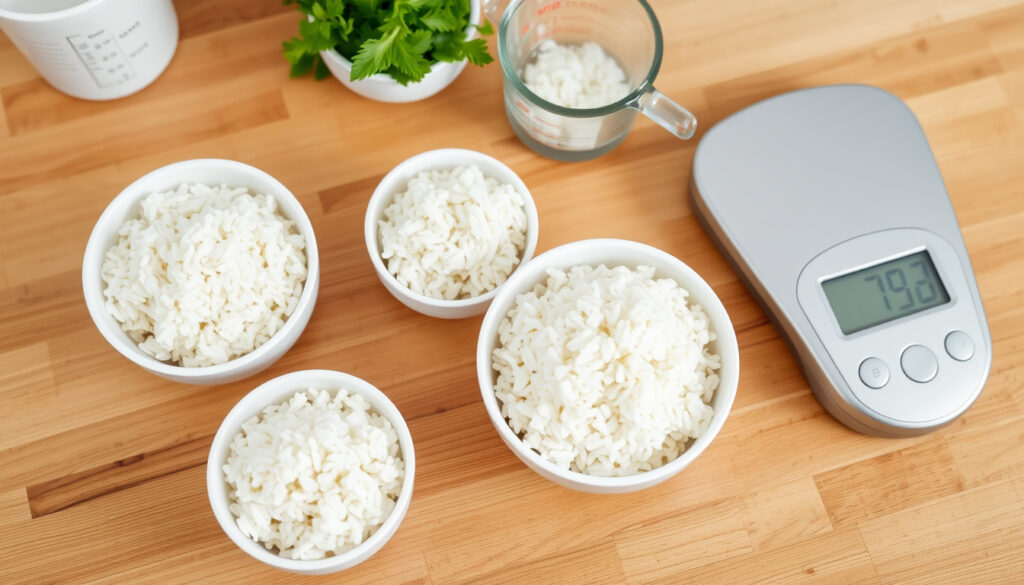
How Much Rice Per Person: Side, Main & Weight Loss Portions
Anyone who’s stood in the kitchen with a bag of rice and a vague memory of last week’s leftovers knows the feeling: too little and you’re hungry, too much and you’re eating stir-fry for days. Getting the portion right isn’t complicated, but it does rely on a few trusted numbers. This guide pulls together evidence-based measures from UK and US editorial sources — grams, cups, and water ratios — so you can cook exactly what you need, every time.
Standard uncooked rice per person (side dish): 50–75 g ·
Standard uncooked rice per person (main dish): 60–100 g ·
Water ratio for white rice: 2:1 (water to rice by volume) ·
Typical serving cup measure (uncooked): ¼ to ½ cup per person
Quick snapshot
- 50–75 g uncooked per person (Kikkoman UK (Japanese condiment brand))
- 150–180 g cooked per person (Kikkoman UK (Japanese condiment brand))
- ¼ cup uncooked per person (Kikkoman UK (Japanese condiment brand))
- 60–100 g uncooked per person (Kikkoman UK (Japanese condiment brand))
- 180–240 g cooked per person (Kikkoman UK (Japanese condiment brand))
- ⅓ to ½ cup uncooked per person (Kikkoman UK (Japanese condiment brand))
- 40–50 g uncooked per person
- 120–150 g cooked per person
- ¼ cup uncooked per person
- White rice: 2:1 water to rice
- Brown rice: 2.5:1
- Basmati: 1.5:1
- Jasmine: 1.75:1
Five key facts — one pattern: portion sizes depend on whether rice plays a supporting role or the lead, and the rice variety changes the water needed.
| Fact | Value |
|---|---|
| Standard side dish (uncooked) | 50–75 g per person |
| Standard main dish (uncooked) | 60–100 g per person |
| Cooked rice volume increase | Approximately 3× uncooked volume (University of Nebraska–Lincoln (food extension)) |
| Common cup measure (uncooked) | ¼ to ½ cup per person (GoodRx (health information platform)) |
| Water ratio for white rice | 2 cups water per 1 cup rice (Spend With Pennies (recipe blog)) |
How much dry rice for 1 person?
Standard gram measures for side and main dishes
- For a side dish, aim for 50–75 g of uncooked rice per person (Kikkoman UK (Japanese condiment brand)).
- When rice is the main event, increase to 60–100 g uncooked per person.
- One cup of dry rice yields about three cups cooked (Purdue Extension (land-grant university)).
The pattern: a side dish portion is roughly half the weight of a main dish portion, making the 50 g difference a simple rule to remember.
Cup equivalents for common rice types
- ¼ cup uncooked is the standard serving for most white rice varieties (Success Rice (rice brand)).
- For basmati and jasmine, ¼ cup dry per person is also recommended.
- Brown rice portions are similar by dry volume, but it expands slightly less (about 2.5×).
Cook ¼ cup dry for a side, ⅓ cup for a main — that’s the simplest rule of thumb. Scale up for hungrier appetites without overcomplicating the math.
How much rice for 2 people in the UK?
Gram and cup measures for two servings
- Side dish for two: 100–150 g uncooked rice (Kikkoman UK (Japanese condiment brand)).
- Main dish for two: 120–200 g uncooked rice.
- In cups: ½ to 1 cup uncooked for two, depending on appetite.
Adjusting for appetite and meal type
- If you’re serving rice alongside a protein-heavy curry, lean towards the lower end.
- For a simple rice bowl, go towards 200 g uncooked for two.
- The standard dry-to-cooked ratio means 100 g dry gives roughly 300 g cooked (University of Nebraska–Lincoln (food extension)).
Is 150g of rice too much?
When 150 g uncooked is appropriate
- 150 g uncooked is a generous main dish serving for one hungry adult (GoodRx (health information platform)).
- It’s also the right amount for two people eating rice as a side.
When 150 g uncooked is excessive
- For a side dish for one, 150 g yields roughly 450 g cooked — far more than a standard ½-cup serving.
- At roughly 170 calories per ½-cup cooked, a full 150 g dry portion would exceed 500 calories, making it unsuitable for weight management.
150 g dry isn’t wrong for everyone — but it’s easy to overshoot when you’re cooking by eye. If you’re watching portions, stick to 50–75 g for a side.
Is rice and water a 2 to 1 ratio?
Standard water ratio for white rice
- Yes, 2:1 water to rice by volume is the standard for white rice (Spend With Pennies (recipe blog)).
- This applies to medium- and short-grain white rice.
The implication: once you know the rice type, the water ratio follows — no guesswork needed.
Ratio variations for brown, jasmine, and basmati
- Brown rice needs more water: 2.5:1.
- Basmati uses 1.5:1 water to rice.
- Jasmine rice sits in between at 1.75:1.
- These ratios come from cooking guides that adjust for each grain’s starch and moisture absorption (Kikkoman UK (Japanese condiment brand)).
Using the wrong ratio turns fluffy grains into a gluey mess. For everyday white rice, 2:1 is safe; for basmati, dial it back to 1.5:1 and you’ll get separate, fragrant grains.
Should I rinse rice before cooking?
Benefits of rinsing rice
- Rinsing removes excess surface starch, reducing stickiness (Purdue Extension (land-grant university)).
- For jasmine and other long-grain varieties, rinsing helps achieve separate, fluffy grains.
When not to rinse (enriched rice)
- Do not rinse enriched rice, because the added vitamins (iron, niacin, thiamine) are coated on the surface and will wash away.
- Many US brands clearly indicate “enriched” on the package.
The pattern: rinsing is a texture choice for most rice, but a rule to follow for enriched varieties.
What is the 5 5 5 rule for rice?
How the 5 5 5 rule works
- Cook rice on high heat for 5 minutes, then medium heat for 5 minutes, then let it rest off the heat for 5 minutes — all with the lid on.
- This method works best for white rice in a covered pot.
- Total cooking time is about 15 minutes, which aligns with Purdue Extension’s guidance of 15 minutes for medium- or short-grain white rice (Purdue Extension (land-grant university)).
Best rice types for this method
- White rice — long, medium, or short grain.
- Not suitable for brown rice or wild rice, which require longer cooking times (up to 50 minutes per Kikkoman UK (Japanese condiment brand)).
The catch: the 5 5 5 rule works only for white rice — brown and wild rice need triple the time.
Confirmed facts
- 50–75 g uncooked rice per person for a side dish (Kikkoman UK (Japanese condiment brand))
- Rice triples in volume when cooked (University of Nebraska–Lincoln (food extension))
- 2:1 water to rice ratio for standard white rice (Spend With Pennies (recipe blog))
- Standard adult serving is ½ cup cooked rice (GoodRx (health information platform))
What’s unclear
- Exact portion for weight loss varies by individual calorie needs — no single number fits everyone.
- Optimal portion for children under 12 is not standardized across sources.
- Whether to use a traditional rice-cooker cup (160 ml) or a standard US cup (237 ml) can change the serving count (Yum Asia USA (rice cooker brand)).
“A standard adult serving of rice is 1/2 cup cooked, or about 1/4 cup dry rice.”
— GoodRx (health information platform)
“For a general guide, use 50 to 75 g of uncooked rice per person.”
— Kikkoman UK (Japanese condiment brand)
“1 cup of uncooked white rice yields about 3 cups cooked.”
— Purdue Extension (land-grant university)
The evidence is consistent: portion sizes hinge on meal role and rice type, not guesswork. For the home cook in the UK or US, the practical takeaway is simple — measure ¼ to ⅓ cup dry per adult, adjust for appetite, and use the correct water ratio. Overcooking and overserving are the two most common mistakes, both avoidable with a cheap digital scale or a marked measuring cup. Anyone trying to control portions without obsessing over every gram should stick with the ¼-cup baseline for sides and rarely waste food or leave the table hungry.
Related reading: how to make brownies · Mary Berry Apple Crumble
cooksinfo.com, yourhealthmagazine.net, facebook.com, laurafuentes.com, successrice.com, reddit.com
Frequently asked questions
How much rice per person in cups?
For a side dish, ¼ cup uncooked per person; for a main dish, ⅓ to ½ cup uncooked per person (GoodRx (health information platform)).
How much rice per person in ml?
Using the standard rice-cooker cup (160 ml), one cup is roughly enough for one serving as a side. In standard US cups (237 ml), ¼ cup equals about 60 ml uncooked.
How much uncooked rice per person and water?
Side dish: 50–75 g uncooked with a 2:1 water ratio (100–150 ml water). Main dish: 60–100 g uncooked with 120–200 ml water. Adjust ratio for brown or basmati rice (Kikkoman UK (Japanese condiment brand)).
How much cooked rice per person?
Side dish: 150–180 g cooked. Main dish: 180–240 g cooked. One cup dry yields about three cups cooked, so ¼ cup dry gives about ¾ cup cooked (Purdue Extension (land-grant university)).
How much rice per person per day?
Most healthy adults can eat ½ cup cooked rice per meal without issue. Over a full day, 1½ to 2 cups cooked rice fits within typical grain recommendations, but check individual calorie and carb goals.
How much rice per person to lose weight?
For weight management, stick to the lower end: 40–50 g uncooked (¼ cup) per serving, which yields roughly 120–150 g cooked. This keeps the calorie contribution under 200 kcal per meal (GoodRx (health information platform)).
Portion of cooked rice in grams?
Standard side: 150–180 g cooked per person. Standard main: 180–240 g cooked. These numbers come from multiplying the uncooked weight by roughly three (University of Nebraska–Lincoln (food extension)).
More related posts
 1923 Season 2: Where to Watch, Episode Count, and Finale Explained
 Nike Miler T-Shirt: Features, Sizes, and Where to Buy
 Sonic X Shadow Generations: Complete Guide & Review
 Best Arepa de Choclo Near Me: The Top Dublin Spots
 FC Seoul vs Barcelona 2025: Score, Scorers, Match Facts
 38 in UK Size: Shoes & Clothes US EU Charts
 How to Make Brownies: Easy Fudgy Recipe with Baking Tips
 How to Hard Boil an Egg: Perfect Yolks and Easy Peeling